Industrial OT Cyber Security: getting a grip on risks where IT and OT meet
By: Hans Risseeuw
In industrial environments, cybersecurity has definitively moved out of the IT realm. Production systems, industrial networks, and control systems are becoming increasingly intertwined with IT environments and external networks. As a result, vulnerability is shifting to the heart of the operation.
Stalled production, safety incidents, and reputational damage are no longer theoretical scenarios, but real risks for organizations that do not sufficiently understand their OT environment.
At the same time, complexity is growing. While concepts such as IT, OT, and cybersecurity circulated as umbrella terms for years, digitalization and regulations are forcing a more concrete interpretation. Cybersecurity is increasingly becoming a shared issue for engineers, IT specialists, and management. It is no coincidence that the topic is shifting towards the management team and the boardroom: OT incidents directly impact the continuity of the primary process.
The vulnerability lies precisely in the connections.
In modern industrial environments, IT and OT layers increasingly overlap. Production systems are linked to physical security, climate control, logistics, and sometimes even to external parties. It is precisely at these interfaces that new vulnerabilities arise. Attacks are by no means always carried out using advanced tools; data traffic can already be made visible using relatively simple means, such as network sniffers.
This makes it clear to technical professionals that OT cybersecurity requires more than applying known IT measures. It demands a deep understanding of industrial protocols, communication patterns, and legacy systems that often remain operational for years. Those unaware of this reality lack insight into the greatest risks within their own installation.
NIS2: necessary pressure or administrative burden?
In addition to technical challenges, pressure from laws and regulations is also increasing. Guidelines such as NIS2 require demonstrable control measures, logging, and reporting. In practice, many OT teams find that cybersecurity threatens to turn into an administrative project as a result, with documentation and compliance consuming increasingly more time.
The core question is how organizations configure cybersecurity so that it supports production rather than hinders it. How do you keep a grip on risks without burdening engineers with extra layers of administration? And how do you ensure that compliance is the result of well-configured security, not the other way around?
From insight to concrete choices
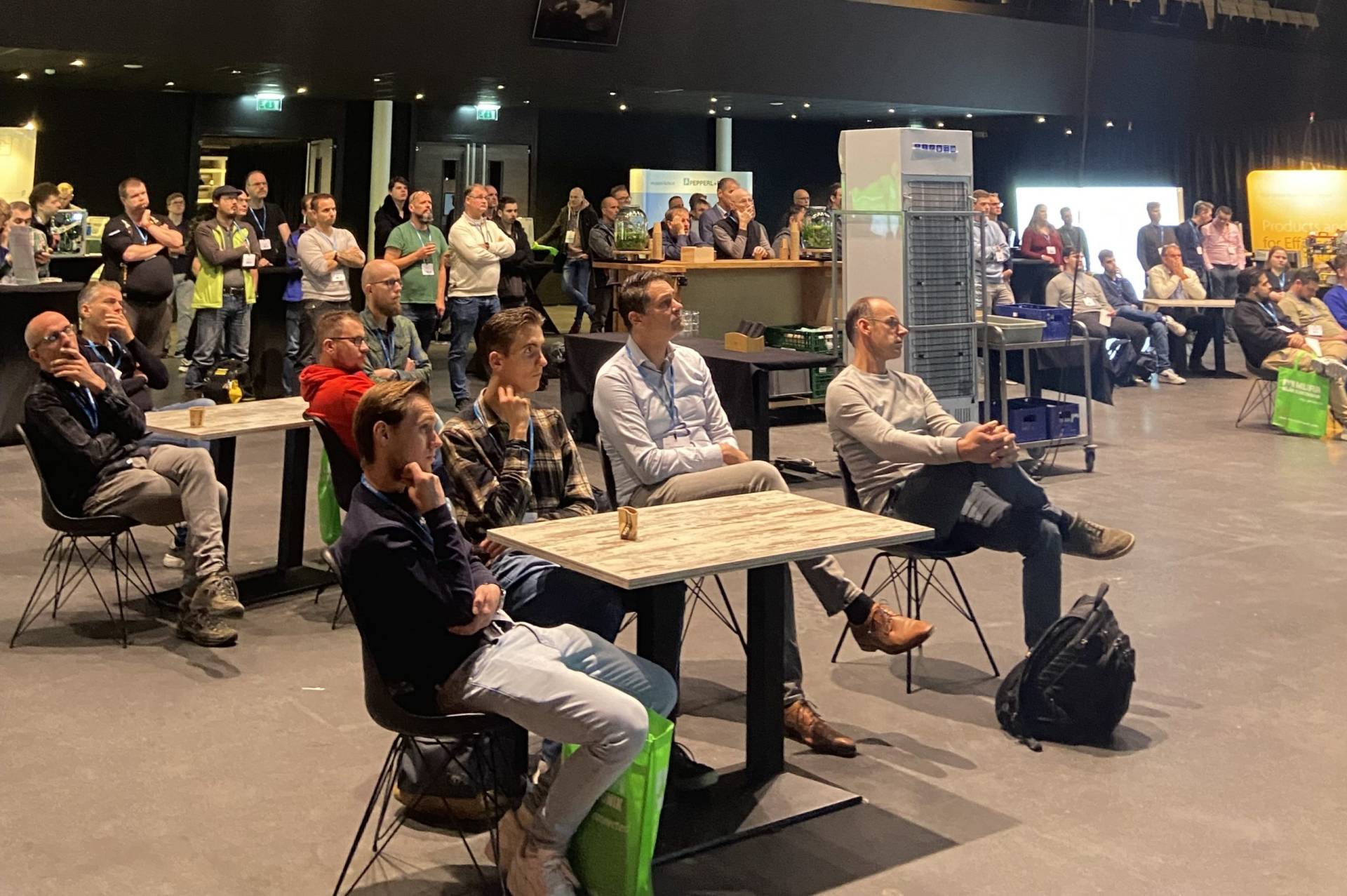
That is precisely where the added value of the seminar lies. Industrial OT Cyber Security during the World of Industry, Technology & Science (WoTS). Not by getting bogged down in abstract models, but by showing how attacks occur in practice and where vulnerabilities actually arise. Practical examples illustrate how simple it sometimes is to understand industrial networks, and how significant the impact can be.
Participants gain not only technical insight but also a course of action. How do you organize OT security smarter? How do you improve collaboration between IT and OT? And how do you create an overview in complex environments without adding new complexity?
For technical professionals who want to go beyond theory
This seminar is intended for engineers, OT specialists, and technical managers who no longer view cybersecurity as an afterthought, but as an integral part of reliable industrial automation. It is not a marketing pitch, but an in-depth exploration that helps make targeted choices in an increasingly complex OT reality.
Anyone who wants to understand where the risks lie and how to make them manageable without paralyzing their surgery will find the practical in-depth knowledge needed now here.
Curious? Visit the website of the largest industrial technology trade fair in the Benelux. www.wots.nl