Intelligent, communicative, wireless: IO-Link wireless from Balluff
February 7, 2022The intelligent combination of industrial networks with the IO-Link communication standard is an essential building block for the factory of the future.
Until now, intelligent sensors and actuators were integrated via cables, just like binary and/or analog devices. In applications in process and factory automation, wireless technologies are increasingly being used today, because they offer many advantages. This means that IO-Link Wireless will play an important role here.
IO-Link – wired or wireless
Balluff's comprehensive IO-Link portfolio includes sensors with different functional principles and an unmatched range of network and connection technologies. With IO-Link Wireless, the future portfolio is expanded to match current developments while maintaining system integration and compatibility.
More flexible than any cable
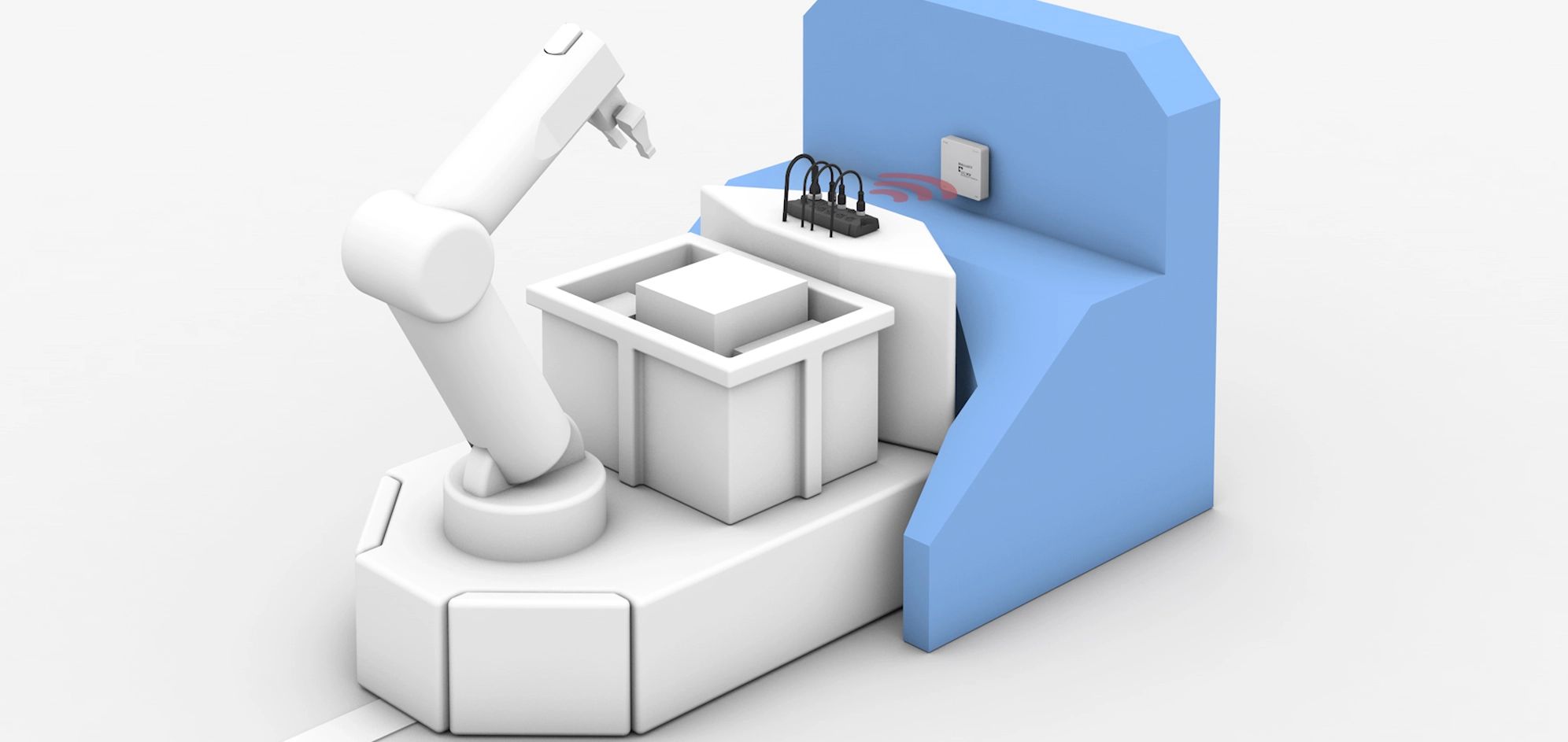
The IO wireless system, consisting of master, hub and bridge, is a new wireless standard and meets the high demands of factory automation. The wireless master does not receive the data via a cable, wirelessly via a bridge or a hub. This offers many advantages over a wired system – such as easier planning and installation, more flexibility in design and mobility, and no wear and tear on plugs or cables. Subsequent adaptation of existing systems is also easier to achieve. In short, the wireless IO-Link variant enables even more flexible and sustainable integration of sensors/actuators – with the proven reliability and performance of wired IO-Link.
Intelligent factory automation of the future – now also wireless
IO-Link Wireless is a new, promising solution for the factory of the future – and an upgrade for current IO-Link users who can now work even more mobile and efficiently with the new application. This new standard can be used/applied wherever classic data transmission was previously impossible or only possible with difficulty: on high-speed conveyor systems, compatible sensors can be placed directly on the carriage for more precise monitoring. When changing tools on a gripper, the absence of cabling enables data transmission in confined spaces. The same applies to milling machines, which offer little space for sensors but require high process reliability. Here, the new system scores with its robustness.
Key Features:
– Easy configuration via integrated web server
– Frequency range 2.4 – 2.483 GHz can be used worldwide without a license
– Fast and reliable