how the process and manufacturing industry is protecting itself against digital threats
OT cyber security on the World of Industry, Technology & Science
By: Hans Risseeuw
The digitalization of industry has undergone a period of rapid development over the past decade. While automation previously focused primarily on physical installations, PLCs, and production lines, cybersecurity has now become a strategic issue that directly affects the heart of companies: the continuity of production processes. It is therefore no surprise that Industrial OT Cyber Security gets a prominent role on the World of Industry, Technology & Science (WoTS).
The Changing Threat: OT Systems on the Front Line
Cyber attacks have come of age. During the Industrial Cyber Security Event 2025 It became crystal clear that criminals today operate in an organized and professional manner. The classic 'hacker in a hoodie' has been replaced by groups that sell services to each other and select specific OT targets. "The Netherlands is more digitally vulnerable than South Sudan," emphasized investigative journalist Huib Modderkolk, a stark and confrontational observation that demonstrates the urgency of the issue.[1] In addition, state-sponsored actors are also playing an increasing role in destabilizing critical infrastructure and industrial environments.
According to experts, this means that cyberattacks are no longer an IT problem, but a strategic risk that directly impacts security, delivery reliability, and even geopolitical stability. Industry is an attractive target in this regard: shutting down production has enormous social and economic impact.
OT/IT: priorities and risks
A common misconception remains that many parties still approach OT security as if it were IT security. Although the two domains are increasingly intertwined, the OT layer remains fundamentally different:
- The priority is safety, process integrity and uptime.
- Systems are often decades old or not designed with security in mind.
- Networks are less flexible and updates are risky or difficult to schedule.
In many discussions, the focus is mainly on critical infrastructure such as rail, energy and water. But the OT in factories, where thousands of machines and production lines operate, unfairly receive less attention. During the WoTS, we make this distinction explicit and deliberately choose the term Industrial OT Cyber Security to put factory environments at the center.
New legislation: NIS2 and CRA set the sector in motion
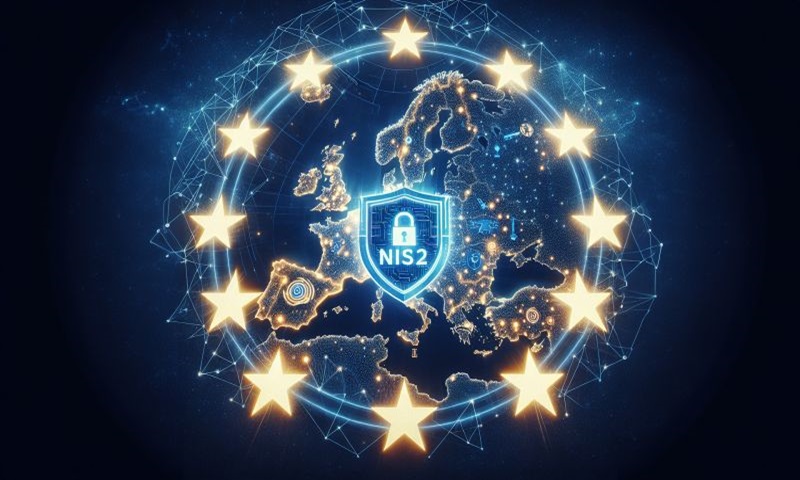
While cybersecurity was optional for years, regulations are drastically changing the playing field. NIS2 and the Cyber Resilience Act (CRA) require organizations to implement demonstrable measures, mature processes, and a higher level of documentation and monitoring.
An important theme during the WoTS is legislation.
- working with IEC62443 security levels,
- OT hardening of networks,
- logging, monitoring and detection,
- lifecycle security in line with the CRA,
- patch and vulnerability management in production environments.
This practical perspective is essential for manufacturers and machine builders who must comply with complex legislation in 2026 while keeping their production running.
From practice: mindset and organization make the difference
Regien Schagen, Global Business Program Manager OT Security at Jacobs Douwe Egberts, aptly describes how essential the organizational side of OT security is.[2] Where ten years ago security was barely on the agenda, it's now a strategic priority. Their biggest risk? Factory downtime.
She emphasizes that a different mindset is necessary:
- no longer thinking that the OT layer is 'safe enough',
- recognizing that every organization is a potential target,
- accepting that cybersecurity is never finished.
The blurring lines between IT and OT make this awareness even more urgent. Companies must involve their organizations, vendors, and technology partners in a mature security strategy.
Strategic perspective: Europe must reduce its technological vulnerability
During previous ICS sessions, Liesbeth Holterman (Cyber Veilig Nederland) outlined a broader geopolitical context in which OT security plays an important role.[3] Europe is situated between geopolitical powers and is heavily dependent on systems from the US and China in terms of technology.
According to Holterman we must get rid of naivety:
- developing alternatives to critical foreign technology,
- apply robust norms and standards,
- building resilience in our digital and industrial infrastructure.
This strategic approach aligns seamlessly with WoTS's ambitions to present both substantive and future-oriented themes.
Technology and innovation: the OT architecture of the future
The themes that FHI is preparing for WoTS show which technological developments will change the industry in the coming years:
- AI in production processes in manufacturing and process industries.
- Industrial networks, from Profinet and APL to Single Pair Ethernet, are often used interchangeably. During WoTS, we'll shed some light on the jungle.
- Digitizing brownfield factories; with 80% outdated installations in the Netherlands, this is perhaps the most important innovation path.
- IT/OT convergence; bridging cultural gaps is as important as integrating systems.
These developments demonstrate that OT security is not just a security issue, but also a enabler for digitalization, robotization and autonomous production.
The role of WoTS 2026: knowledge sharing and acceleration
The WoTS offers a platform where manufacturers, industrial end users, system integrators, suppliers, policymakers, and security experts can meet. Collaboration is essential, especially in a domain where knowledge is fragmented and technology is changing rapidly.
Topics such as Industrial OT Cybersecurity, legislation and regulations, AI in the factory, industrial networks, and digitalization are the common thread running through the seminars and presentations. The trade show not only stimulates innovation but also helps the sector become mature, robust, and resilient in an increasingly complex threat landscape.
[1] From espionage to sabotage – FHI, federation of technology industries
[2] Jacobs Douwe Egberts on OT security – FHI, federation of technology sectors
[3] OT cybersecurity is finally on the agenda – FHI, federation of technology industries