HRM Current Affairs Seminar 2025 Review
By: Hans Risseeuw
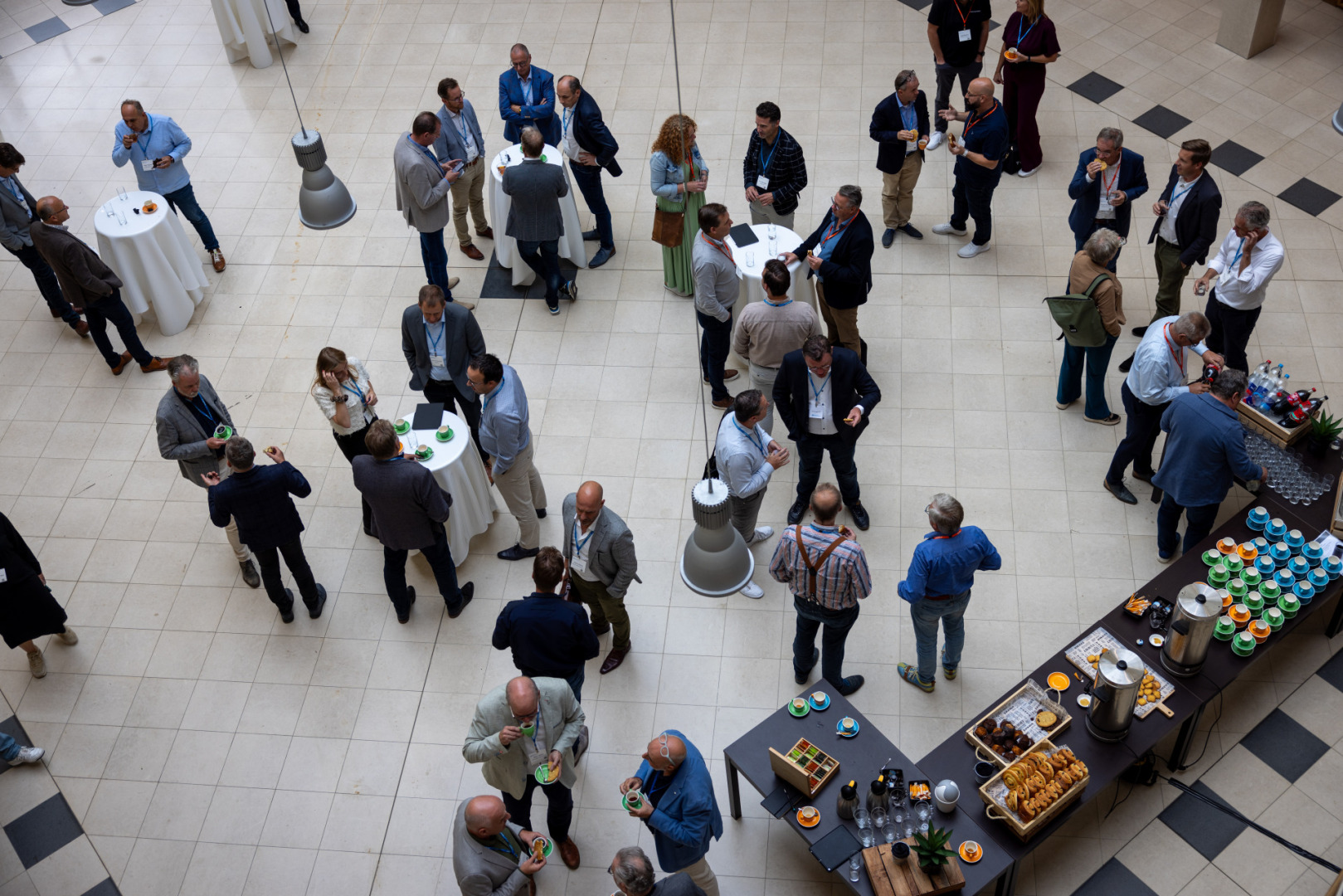
The HRM seminar took place at FHI in Leusden on Thursday, November 20, 2025. HR professionals from the technology sector gathered in the atrium for a busy and informative day. Experts from various disciplines—from employment law to AI—shared their knowledge and experience.
Andreas Meijer, director at FHI, warmly welcomes the packed room. "A varied program for a diverse audience," Andreas says proudly. "We have a full program and limited time; I'll keep it short." In his brief opening remarks, Andreas emphasizes the importance of sound HR policy. He also takes a moment to highlight the FHI HRM working group. This working group meets three times a year. Interested HR professionals are very welcome to attend.
On the FHI website You can read the program and mark November 5, 2026, in your calendar. The next HRM current affairs seminar is already scheduled for the year.
Labor law
Vestius Advocaten opens the seminar. Sander Pieroelie, Anna Görgün, Michiel van Haelst, and Maria-Christina Kool lead the audience through a well-structured presentation. Major, relevant topics, which we all encounter to a greater or lesser extent, are covered. FHI Advies gratefully utilizes the specialists of Vestius Advocaten. From bogus self-employment, absenteeism due to illness, and reintegration obligations to wage transparency and AI, Vestius Advocaten isn't afraid to tackle the big issues. A particularly striking moment is the observation that closing the gender pay gap is proving difficult. "We need a drastic measure," says Michiel. "And that's precisely what the wage transparency directive is designed for."
All four lawyers agree on one thing: prepare well. Don't be caught off guard.
Stress-resistant
According to Sandra Engelbertink and Laura Schmidt of Human Resources and the School for Workplace Happiness, stress isn't an enemy, but an unavoidable part of life. "Everyone experiences stress; it's part of life," Schmidt emphasizes. At the same time, they see that mental health issues account for an increasing share of absenteeism due to illness. That's precisely why early recognition is essential. Engelbertink calls the role of managers crucial: the right conversation at the right time. They believe that stress revolves around resilience, resilience, and the balance between seeking out tension and being able to relax again.
Engelbertink and Schmidt will be discussing stress signals with the HR professionals in the audience: from a short fuse to reacting angrily or withdrawing. "Identifying the signals is very important," someone from the audience says. To make this conversation more accessible, they developed a game. Stress-resistant: a conversation starter with four thematic categories. Through reflective questions, the cards help employees become aware of their energy drains and sources, with the goal of increasing ownership and openness. Are you interested in the light version, Stressbegandig (Stress Agility), specially developed for FHI? Then contact Laura Smidt: laura@personeelszaken.nl
A transparent remuneration policy
Hanneke van Dorst (Human Capital Group) opens her presentation by asking what HR professionals face when finding and retaining talent. Shortages, an aging population, and quickly bored vocational training (BBL) graduates are all discussed. "We can't solve that today," says Van Dorst matter-of-factly, "But we can ensure that people stay with us." According to her, compensation is only one part of that bigger picture. The job classification system, salary structure, and benefits together form the foundation for a fair and transparent compensation policy.
Van Dorst advocates for an "onion model," where a fair base salary is the foundation of hygiene. "The fixed salary shouldn't be a source of dissatisfaction." Transparency is crucial, she believes, including for new employees. She sees a trend where salary growth is being decoupled from performance: automatic increases for everyone, supplemented by targeted appreciation throughout the year. She believes variable pay is often counterproductive: "The effect of satisfaction is short-lived; the disappointment lasts much longer." Ultimately, it's primarily non-material factors that are the most compelling: atmosphere, autonomy, job satisfaction, and development opportunities.
AI in HR
In their session on AI in HR, Rick Weijers and Bram Steenkamp (Quintop) outline how AI assistants are rapidly evolving from a technical gimmick to a standard part of HR work. According to them, AI isn't replacing roles, but tasks: from skills matching and absence analysis to lightning-fast reporting. At the same time, they warn of "shadow AI," employees who still use ChatGPT despite policy prohibitions. The EU AI Act compels organizations to be transparent: employees must know how AI is being used. Successful implementation therefore requires a clear strategy, good data quality, and AI-skilled employees.
HRM Current Affairs Seminar