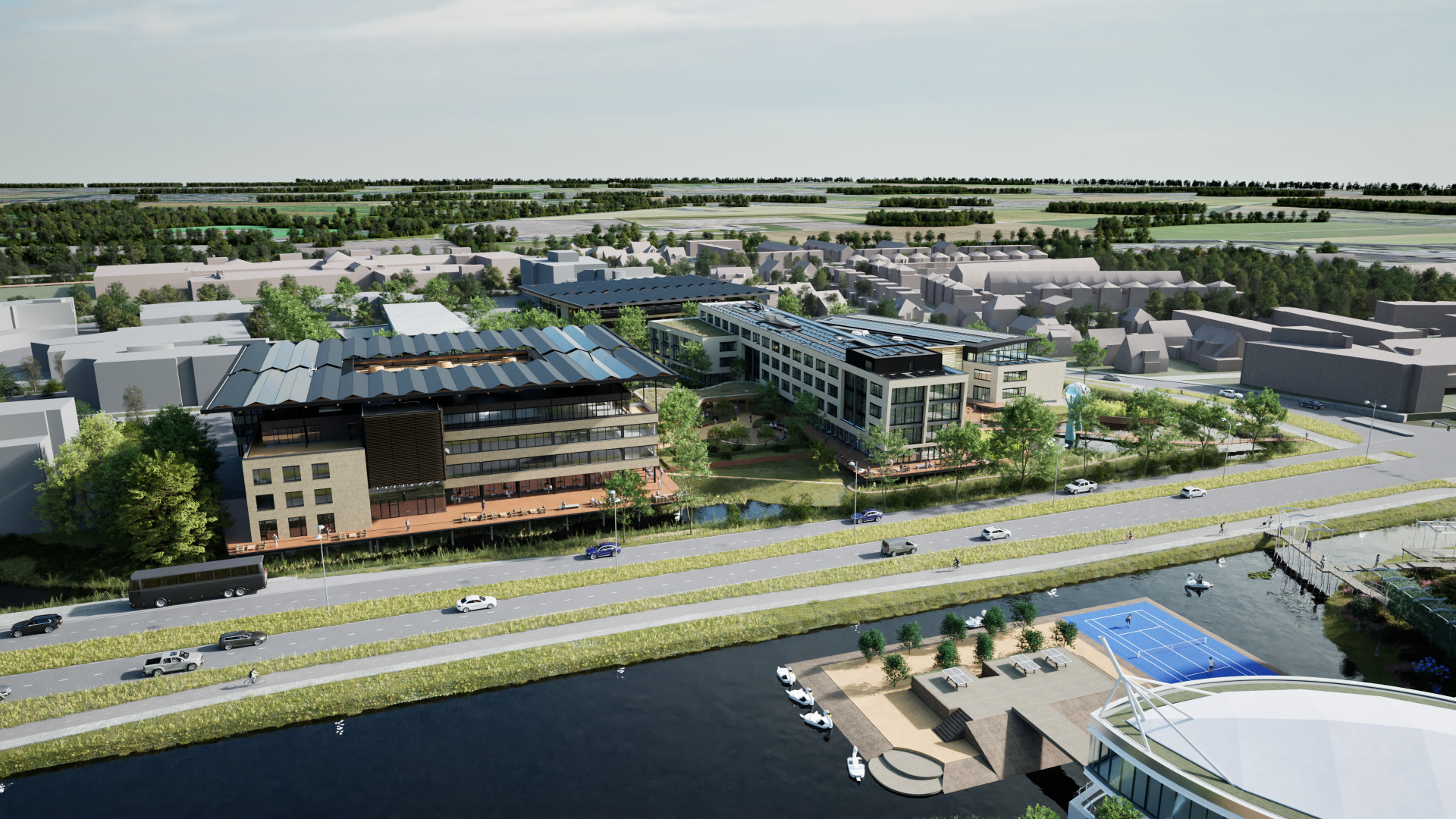
AFAS is transforming three office buildings on Storkstraat in Leusden into future-proof workplaces. Family Office Director Pieter Mars explains how sustainable construction and collaboration converge to create a campus for current and future generations.
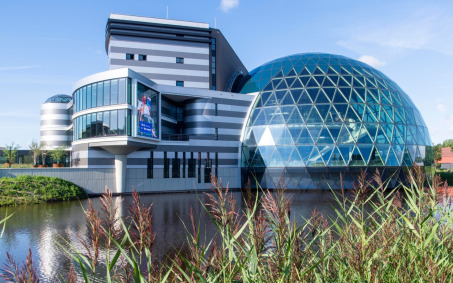
The impressive AFAS Clubhouse is located on Inspiratielaan in Leusden. Across the road, AFAS is renovating and making three existing office buildings more sustainable. One of these has now been completed as dotNL, a workspace for AFAS partners. Pieter Mars, Director of the Family Office, is responsible for this development. "We now manage almost 100,000 square meters of real estate in Leusden. That means looking beyond today; you have to consider how these buildings will function in thirty years."“
For AFAS, renovation is not a real estate project, Mars emphasizes: “We don't invest to sell again in a few years. When we renovate, it has to be future-proof. We are a family business, so we always consider the next generations.” The Clubhouse, which was newly built, served as a benchmark with a BREEAM score of 88 percent. “The approach at dotNL The goal was to get as close as possible. Ultimately, we're now at over 97 percent."”
Sustainability
This sustainability upgrade started with what Mars calls the foundation. "Our motto was: keep the cold and heat out. We literally started at the shell and worked from the outside in." Roofs received extra insulation, all glass was replaced with triple glazing, and the large glass atrium roof in the restaurant was largely closed to limit overheating. "We now also have louvers that move with the sun, so you don't need as much cooling." Thousands of solar panels cover the roofs and the parking garage. "And something we didn't have at the Clubhouse, we do have here: the graywater system."“
With this system, AFAS collects 7.5 million liters of rainwater annually. Mars explains how it works: "All the water goes from the roofs to the pond, where it's first purified by plants. Then it goes to a technical room for the final purification and then back into the building, where we store it in barrels as a buffer." This water is used to flush toilets and irrigate the greenery. "It's actually bizarre that one toilet flush uses six liters of drinking water. We believe that, in addition to energy, water will also become scarce in the future."“
Partners
Sustainable renovation isn't a goal in itself for Mars. The buildings should primarily facilitate something. DotNL is therefore used not only by AFAS, but also by around forty partners. "We started this in Belgium, where we had available space. Partners asked if they could be closer to AFAS. When these properties came our way, this was our opportunity to create a space for them."“
These are implementation and production partners: companies that provide products and services that AFAS doesn't want to or can't develop itself. According to Mars, literally sitting next to each other creates a different dynamic. "You can do a lot through Teams, but it still feels a bit cold. When you have lunch together, play sports, or just talk spontaneously, you really get to know each other. Then you start working together to find the best solutions for our shared customers. This close collaboration ultimately leads to a higher level of service."“
Campus feeling
This campus concept will take shape further in the coming years. Mars outlines how the buildings will eventually be connected by a footbridge over the road. "That will create a real campus feel. People can have lunch in the Clubhouse and use other facilities across the street." At the same time, he emphasizes that growth isn't a goal in itself. "We don't want to buy up every property in Leusden. It has to remain manageable and, above all, lead to improvement."“
While Mars was initially skeptical about the sometimes detailed requirements of BREEAM certification, he now sees it as a valuable benchmark. "If you build according to BREEAM, you automatically put people first. A good climate, good workplaces, comfort—it's all interwoven." Sustainable building thus proves to be more than just energy and materials. "If you comply with those requirements, you're not just being sustainable, but above all, you're creating an environment where people can enjoy working."“
Would you like to see how AFAS is developing a sustainable and future-proof campus? During the Digital Building of the Future on June 3, 2026, at AFAS in Leusden, Pieter Mars will talk about the choices, challenges, and lessons learned from this project. Read more about this event below.