
Reducing CO2 emissions in cable production with the Pastel B process.
Clear wire identification with different colors is essential for the fast and secure connection of cables and wires. However, conventional marking methods also have disadvantages, such as environmental friendliness, for example. “Pastel B” is an alternative method for marking wire pairs in a more efficient, low CO2 and sustainable way.
A potential area of application for the new marking method is four-twist data cables, such as those used in Ethernet cabling. In these cables, each pair of wires has an A and a B wire, which are color coded for easy identification. The colors are standardized and defined as follows:
- green / green-white
- orange / orange-white
- blue / blue-white
- brown / brown-white
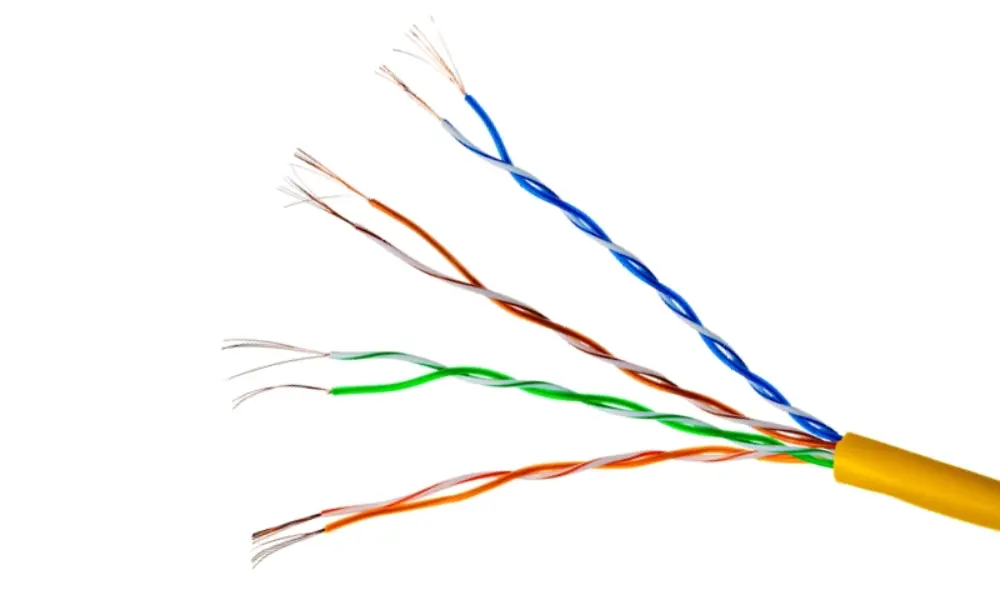
An existing method for marking two-tone cores is to add a longitudinally extruded colored stripe to the white core insulation.
The oldest method of marking two-color nuclei is called ring marking. Rings of the correct color are sprayed onto the existing white core insulation using a paint spray gun. However, the process is not very efficient: As with any painting process, not 100 percent of the paint ends up on the core, resulting in increased material consumption and CO2 emissions. The solvents in the paint can also cause unpleasant odors and, if inadequately extracted, pose a health risk. In addition, some materials do not adhere well to the paint, which complicates cable assembly and makes it more time-consuming.
However, in the future, an alternative process could help make wire marking, and thus the entire cable manufacturing process, more resource and energy efficient and overall more environmentally friendly. The so-called “Pastel B” process does not mark a white B core with a colored stripe or ring, but the entire core insulation is produced in a color that matches the A core, but is significantly lighter. For example, the nuclear pairs are light and dark green or light and dark blue, and can be clearly distinguished.
The benefits of the Pastel B process: No varnishes or solvents are used, meaning no chemicals are released into the environment during application. The process can be performed on standard extruders with a color feeder, without the need for an additional stripe extruder. This reduces both investment costs and energy consumption. Forecasts have shown that using Pastel B could reduce CO2 emissions by about 15 percent, or about 20 tons per year for an average cable factory. It also reduces the number of tools that need to be stored and maintained. The marking is clear, permanent and cannot be wiped away. This means that all requirements for accurate wire marking are met, with significant benefits in terms of cost and durability.
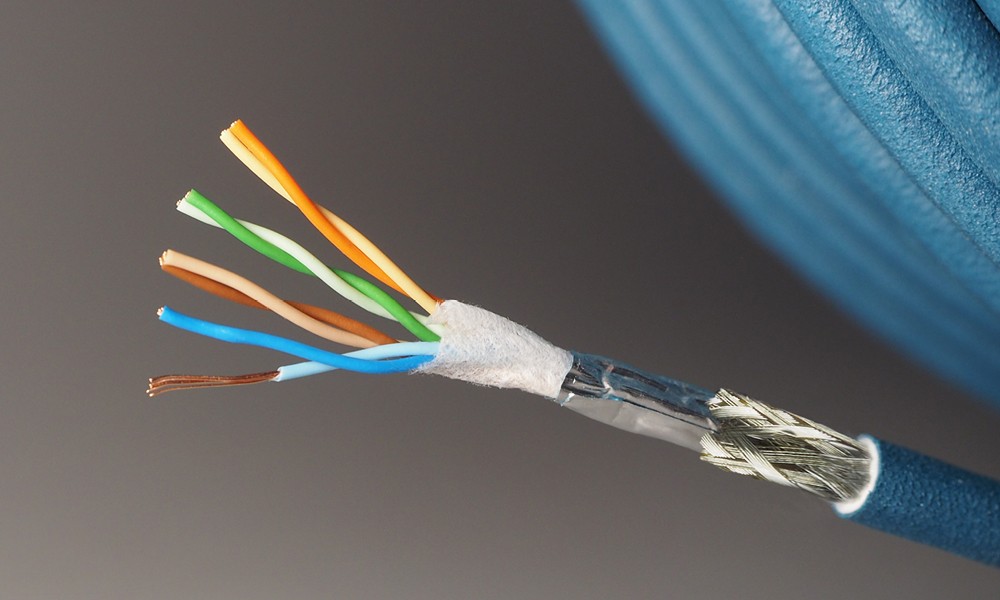
In the “Pastel B” process, the entire core insulation is produced in a color that matches the A core, but is significantly lighter.
There is also nothing in the IEC 11801-1, EN50288-7, ANSI TIA/EIA 568 and IEC 60304 standards for cable manufacturing that prevents the use of the Pastel B process. However, there are other reasons why it is not yet in use: first, users have long been accustomed to conventional marking methods, and second, customers want consistent marking, which is likely to delay the transition.
A successful introduction can be accelerated if Pastel B is included in standardization and if national and international committees and associations such as ZVEI and Europa Cable become more involved in the process. Increasing customer demand would also help convince manufacturers and promote standardization of the new process. In any case, HELUKABEL sees a lot of potential in Pastel B wire marking and is technically able to implement and offer it at its production sites without any problems.