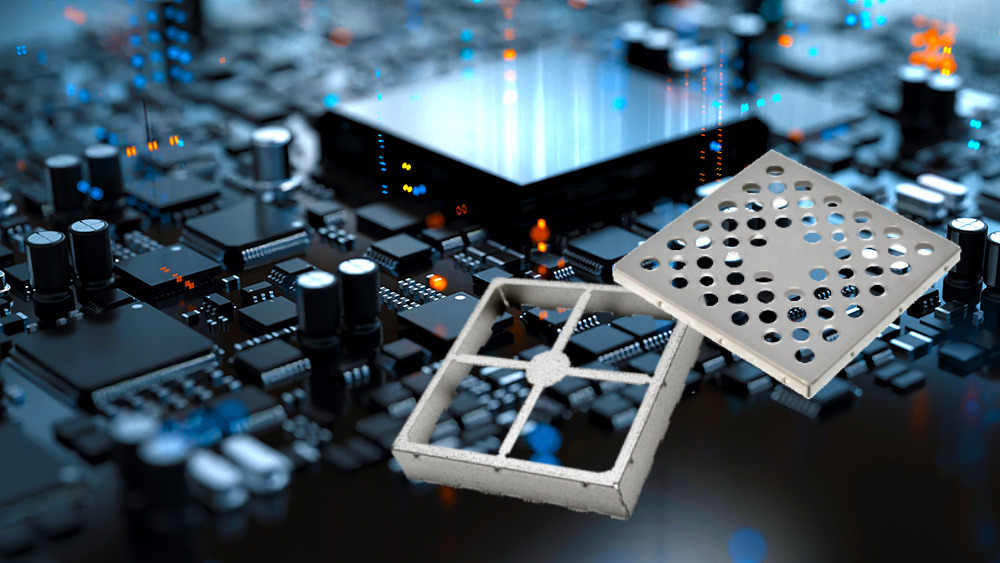

Designing 5G hardware introduces new EMI/RFI challenges, particularly due to the introduction of the 60 GHz frequency. Many mmWave signals are present at short distances, tolerances are becoming tighter, and system integration more complex. Interference problems often arise at housing seams, connector interfaces, and due to insufficient grounding between printed circuit boards and the chassis.
Traditional late-stage EMI solutions are insufficiently scalable in 5G applications and lead to inconsistent performance in production.
LeaderTech supports design teams with a broad portfolio of solutions:
- PCB shields for sensitive modules
- Fabric-over-foam and metal EMI gaskets for reliable shielding around panels and I/O interfaces
- Conductive elastomers for housing seals
- Honeycomb vent panels that combine airflow with high shielding effectiveness
Effective EMI/RFI shielding requires an integrated approach from the early electronics and mechanical design phases. Key considerations include: continuous grounding paths, controlled compression of EMI gaskets, and the prevention of unwanted leakage paths during assembly or under thermal loading. Ventilation openings pose a risk if airflow is not combined with adequate shielding.
By integrating EMI/RFI measures early in the design, developers can improve the performance, reproducibility, and time-to-market of 5G systems.