Every day, Erasmus MC's laboratories process thousands of samples that directly influence medical decisions. To make this flow faster, safer, and future-proof, the hospital is consolidating routine diagnostics from fourteen laboratories into a single, automated laboratory line.
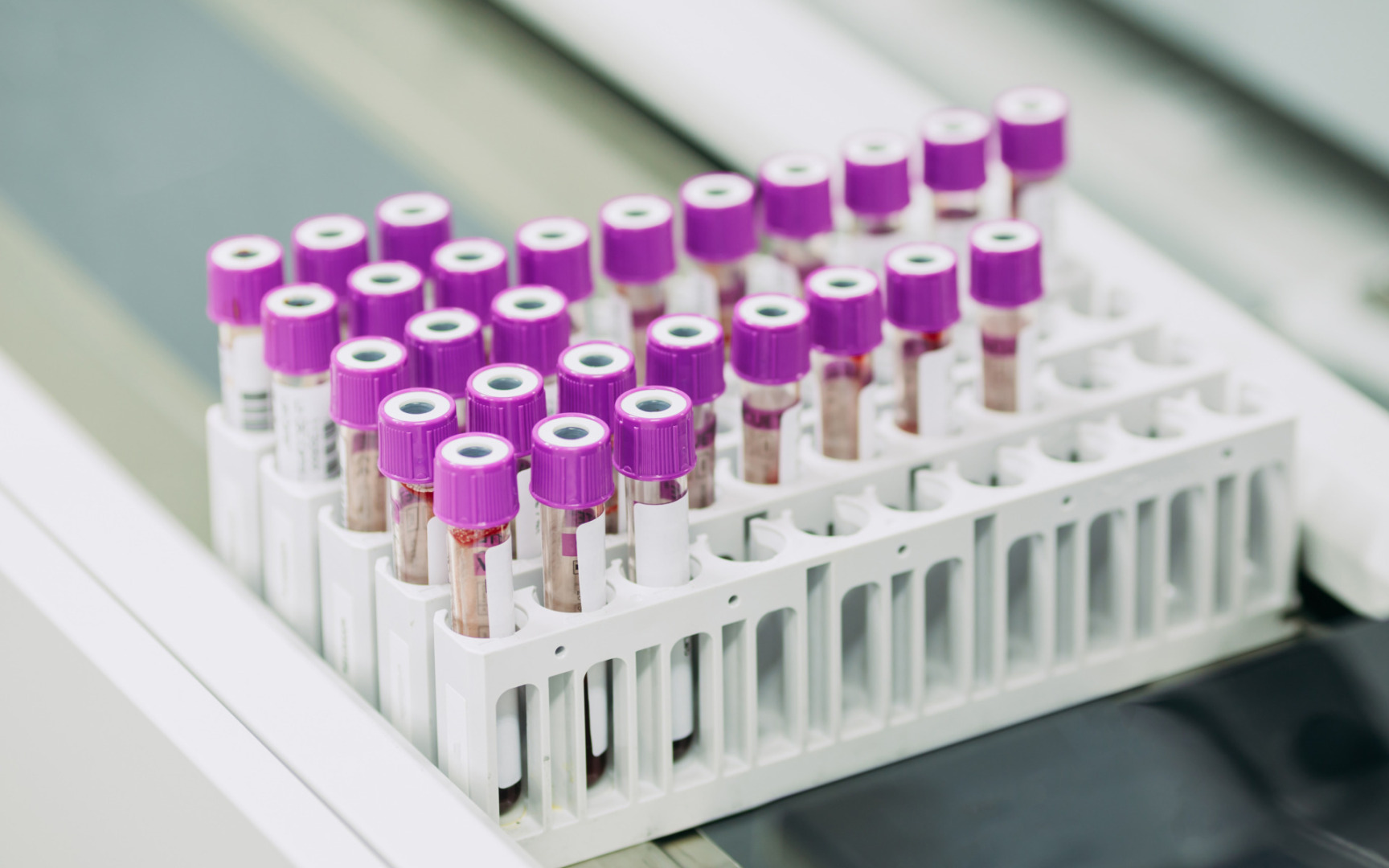
At Erasmus MC, over 675,000 patient samples are processed annually, yielding 9.1 million results. Between 5,000 and 6,000 tubes of blood flow through the system daily. With such volumes, speed, reliability, and quality are not luxuries, but essentials. For clinical chemist Christian Ramakers, 2023 was the perfect time to more intelligently connect the routine diagnostics of Erasmus MC's fourteen laboratories into a single Total Laboratory Automation (TLA) solution.
Academic complexity
Besides being a clinical chemist, Ramakers is also the medical coordinator of the Diagnostic Core Laboratory, a department established to centrally perform highly automated routine tests within the hospital. "In peripheral hospitals, you often have three types of laboratory diagnostics: clinical chemistry, pharmacy, and medical microbiology. We have fourteen of these, including separate labs for immunology, virology, endocrinology, and coagulation. That's part of our academic nature and the complex patients we see." The core laboratory isn't taking over those laboratories, he emphasizes. "We're simply consolidating the 24/7 routine tests, so the specialized labs can focus on complex diagnostics and innovation."“
The impetus for this transition was broader than just modernizing the equipment. Efficient working and closer collaboration played a role, as did patient safety and the anticipated tight labor market. But, says Ramakers, cost savings wasn't the starting point. "We want to maintain our academic credentials. That also means maintaining tests that aren't cost-effective, but are essential for our patient care. Take our BSL3 lab for hemorrhagic fever viruses like Ebola, for example. This lab houses analysis equipment for analyzing highly infectious blood samples that are rarely used, but are essential."“
17 kilometers of pneumatic tube
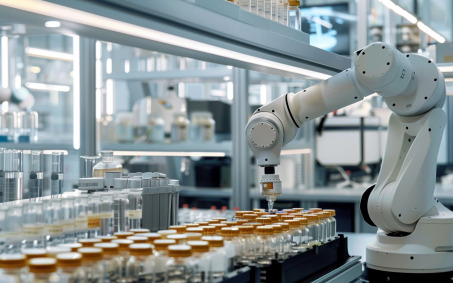
The new TLA is essentially a laboratory-scale logistics system. "We have about 17 kilometers of pneumatic tube systems in the hospital. Samples arrive centrally via this system into a bulk loader, are automatically placed in racks, the barcode is scanned, and the system knows exactly which tests need to be performed." A transport system then transports the tubes to the correct analyzer, after which they end up in a refrigerated archive. "There's still human oversight. All results are received in a central 'cockpit.' There, an initial check takes place: did the device do what it was supposed to? This is followed by substantive authorization, where an analyst assesses how the result compares to previous values and other measurements. Only after these checks have been completed is the final result sent to the requesting physician."“
Co-ownership
For analysts, the work has been gradually changing for years. "In the past, the analyst would pipette at the lab table. Now, it's much more process operators. We monitor the process, identify anomalies, and interpret results." This took some getting used to, especially for the 'old guard.' New analysts find it easier to adapt. At the same time, the integration requires additional training. "We're going to be doing tests we've never done before. We'll be asking virologists and microbiologists, for example, to train our people in this area. We place a lot of emphasis on this kind of co-ownership."“
That co-ownership is crucial to overcoming skepticism, Ramakers explains. "People have to hand over something they know and master. That requires trust. That's why we very deliberately said: the core laboratory doesn't belong to us, but to all of us." An example is drug and medication levels, which were previously determined at the pharmacy. "We can perform those tests perfectly well, but the pharmacist remains responsible for the interpretation."“
Tropical months
The biggest challenge in building a new TLA lies in the transition phase. The laboratory is operating 24/7 while rooms are cleared and equipment is moved to a temporary transition lab. "It's a fine line. If something goes wrong, it has immediate consequences for service provision. These are challenging months." A comprehensive communications plan is in place to inform colleagues within the hospital about the changes. "And yes, we're treating everyone to apple turnovers and sausage rolls to show our appreciation."“
The core laboratory has been operating in a transitional space for months now. The renovated space for the new TLA is being built step by step. "It's like a sliding puzzle: freeing up one space each time to accommodate something else." The core clinical chemistry equipment will go live on April 14th. This will be followed by a phased expansion to include coagulation, microbiology, virology, and later immunology and endocrinology. The entire facility is scheduled for completion by mid-2027. "We're still on schedule and within budget. That's quite remarkable for these kinds of projects."“
Looking back, Ramakers sees the importance of communication above all. "You can have a vision that's supported by the board of directors, but if you don't get the work floor and your fellow medical specialists on board, you'll get nowhere. You have to keep talking, repeating things, listening. But sometimes you also just have to dare to make decisions." His advice to other laboratories is simple: "Take your time, involve your staff, and give them responsibility. It shouldn't be an ivory tower project. Ultimately, it takes all of us to get there."“
Want to learn more about how Erasmus MC implements Total Laboratory Automation in practice? During the LabAutomation event on March 10, 2026, Christian Ramakers will discuss the choices, challenges, and lessons learned from this process in detail.