LabAutomation 2026: technology that moves the laboratory forward
By: Hans Risseeuw

LabAutomation 2026 underscored the importance of knowledge sharing and collaboration within the laboratory field. On Tuesday, March 10, 2026, the world of laboratory automation gathered at Congrescentrum 1931 in 's-Hertogenbosch. Professionals from research, diagnostics, and industry met for a day full of knowledge sharing, practical experiences, and technological innovation. One question was central: How do we make today's laboratory faster, smarter, and more reliable?
Laboratories are under increasing pressure due to higher throughput speeds, stricter regulations, and a growing volume of data. During LabAutomation 2026, it became clear that automation is no longer a vision for the future, but a necessary step in daily practice. The content program focused on smart workflows, robotization, and digital integration, with attention to both strategic choices and concrete implementations.
Speakers from academic centers and technology organizations, among others, shared case studies in which automation demonstrably contributes to more efficient processes, fewer errors, and more reproducible results. In doing so, they looked not only at technology but also at organizational preconditions such as collaboration between IT and the lab, data quality, and change management.
AI, data, and LIMS/ELN in the leading role
A key thematic focus was the role of artificial intelligence and data analysis in the modern laboratory. Sessions demonstrated how AI applications are deployed for pattern recognition, quality control, and decision-making support. In combination with LIMS and ELN solutions, this creates an integrated digital infrastructure in which data is more discoverable, reusable, and compliant.
The speakers emphasized that successful digitization begins with standardization and interoperability. By intelligently connecting systems and devices, laboratories can take steps towards end-to-end automation, from sample reception to reporting.
Case studies and inspiration from the field
The program offered ample space for real-life stories from organizations that have already taken steps in automation. They candidly shared their experiences: what worked, what challenges they encountered, and which choices proved crucial in hindsight? This practice-oriented approach made LabAutomation 2026 particularly relevant for visitors who are themselves on the verge of starting automation projects.
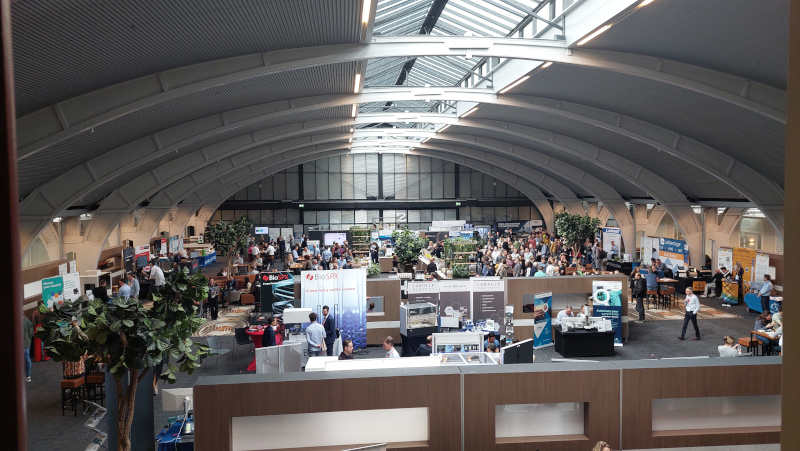
In addition to the lecture program, the exhibition floor was an important part of the event. Here, suppliers presented their latest hardware and software solutions, with live demonstrations of robotics, sample handling, and smart sensors. Visitors could speak directly with experts and compare concrete applications for their own lab environments.
Connecting technology and daily practice
What distinguishes LabAutomation is the clear link between innovation and applicability. The event demonstrated that laboratory automation is not about isolated technologies, but about the integral improvement of processes. By bringing together knowledge, experiences, and solutions, LabAutomation 2026 served as a meeting place where inspiration was directly translated into action.
With a compact, substantively strong program and a clear structure, the event offered visitors the opportunity to gain an up-to-date picture of the state of affairs and the future of laboratory automation in a single day.