Analyzing microplastics remains a challenge: low concentrations, diverse polymers, and complex matrices make accurate measurements difficult. Sjaak de Koning, senior manager at GL Sciences, sees pyrolysis-GC/MS as a promising method that helps researchers better identify and quantify microplastics.
Microplastics are present in our drinking water, food, and our bodies. These tiny plastic particles, smaller than five millimeters, are created by the breakdown of larger products or are released directly from cosmetics and synthetic fibers. Their presence raises questions about their effects on humans and the environment. These questions are difficult to answer as long as researchers cannot precisely measure the quantities and types of microplastics present.
Analyzing microplastics proves to be anything but simple. The concentrations in samples are often extremely low, and the particles occur in a variety of matrices. "We speak with researchers who study microplastics in the environment, but also in meat or fish," says Sjaak de Koning. "Especially the latter samples, with a high fat load, require careful sample preparation. There's no standardized method for this yet. Only once that step has been taken does analysis technology come into play. Pyrolysis-GC/MS is rapidly gaining ground in this area."
Pyrolysis-GC/MS
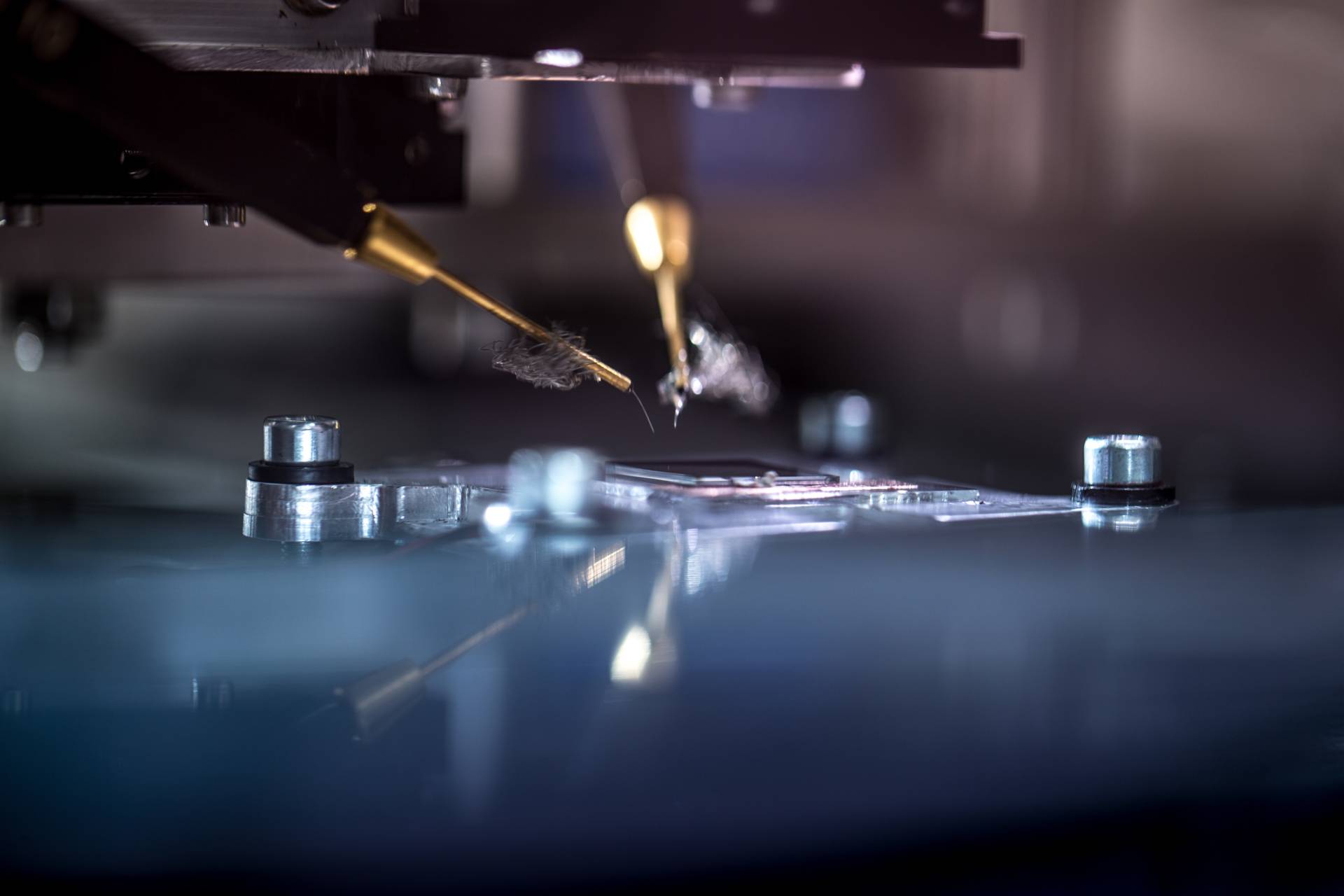
In Pyrolysis-GC/MS, the microplastic is first heated until it breaks down into smaller molecular building blocks (pyrolysis). These fragments are then separated in the gas chromatograph (GC) and identified by a mass spectrometer (MS). The result is a pyrogram: a series of peaks that together act as a chemical fingerprint of a particular polymer. This allows researchers to determine not only that microplastics are present, but also which types are present in a sample.
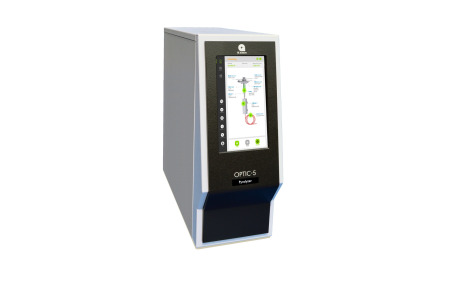
GL Sciences is responding to the growing demand for this type of analysis with the OPTIC-5 pyrolyzer. "The OPTIC is actually an old product," says De Koning. "Laboratories have been using it as a PTV injector since the 1990s. Pyrolysis has always been possible, but only in recent years have researchers discovered how suitable this system is for microplastics." The latest version, the OPTIC-5, was introduced on April 1, 2025, and is now in use at various research institutions and environmental laboratories.