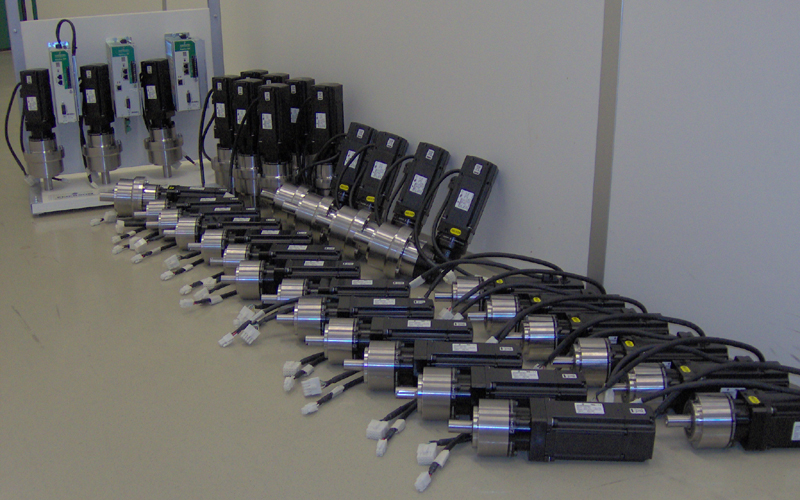
 Do you know why we still use reducers while modern servo motors are becoming increasingly powerful and advanced? In many cases, the reducers from Apex Dynamics are used in combination with a servo motor, for example because they have little backlash and can handle high torque. But that still doesn't answer the previous question: why! That's why we'll be focusing on this in this article. the operation of servo drive and translate this into the use and application of reducers.
What is a servo drive?
The prefix servo comes from the Latin servus, which means slave or servant: technically translated to following or executing an order. A servo motor therefore follows the (complex) order that is given to it. For industrial applications, servo motors are used where a drive must be accurate or highly dynamic. The feedback to the motor is via a resolver (analog sensor of angular displacement) or encoder (digital sensor of angular displacement). A servo motor is controlled by a servo amplifier, possibly with an axis control.
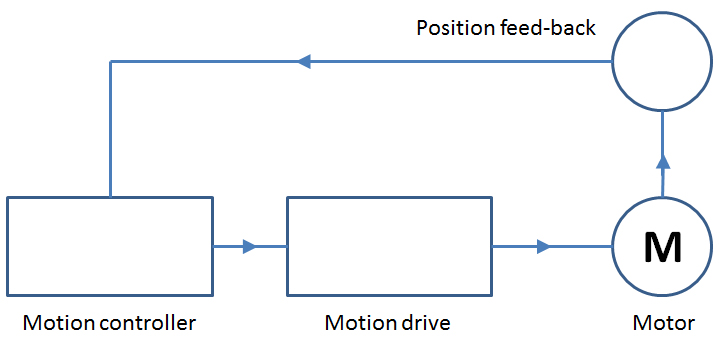 The rotational frequency of the servo motor is fed back by the resolver or encoder. This is able to determine not only the speed, but also the position of the rotor and the direction of rotation. The servo amplifier compares the set rotational frequency with the rotational frequency as measured. The servo amplifier can now control the servo motor to the desired values.
Are you still wondering which reducer to choose next time, read it here or contact Apex Dynamics?