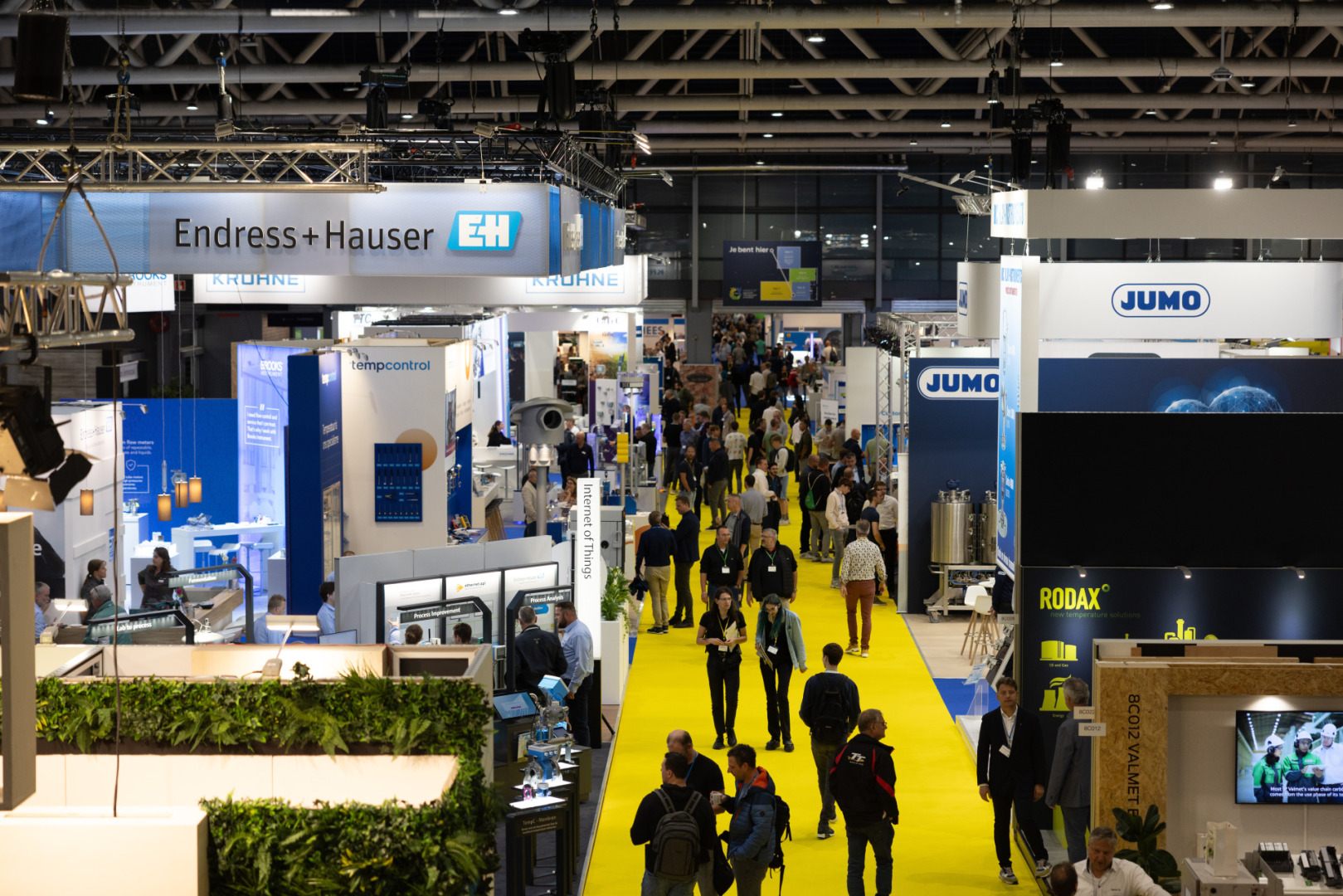
Word of Laboratory: Technology for the lab of tomorrow

The World of Laboratory brings together all relevant topics for laboratories in industry, healthcare, and research. Exhibitors will inform you about the latest solutions, from design and equipment to analytical instruments and chemicals. The program of seminars, workshops, and X-peditions is designed to inspire and provide practical tips. Attend lectures and workshops on safety, analytical techniques, sustainability, sample management, AI, and life sciences.
Safety
Accidents can easily happen, especially in an environment where hazardous substances, biological materials, and specialized equipment are handled daily. Safety is therefore an integral part of laboratory work. It's not just about rules and protocols, but above all about conscious action at every step of the process. From the storage and use of substances to workplace behavior: safety begins with alertness and risk awareness.
Safety in the lab has long since ceased to be solely about handling hazardous substances, but rather about a broader approach to risks. Topics such as biosecurity and dual-use questions for awareness: how do you prevent knowledge or materials from being unintentionally misused? This requires not only technical measures, but also a safety culture in which employees look beyond their own daily practice and learn to approach risks from different perspectives.
Also ergonomics and mental health play an important role in preventing incidents. Prolonged pipetting, repetitive actions, and high workload can lead to physical complaints and reduced alertness. Attention to work posture, workplace design, and mental well-being directly contributes to a safer working environment and better performance in the lab.
During World of Laboratory, awareness and safety throughout the entire chain are central. Seminars, workshops, and an X-pedition will be organized within this theme, providing practical tools to structurally embed safety in your daily work practices.
Sustainability
Sustainability is a key concern for many laboratories. At the same time, a lab is no ordinary work environment: high quality standards, specialized equipment, and strict safety regulations make sustainability more complex than in an office environment. Laboratories consume significant amounts of water and energy and produce significant amounts of waste. This is precisely why there is increasing interest in practical measures that laboratory technicians and lab managers can use to improve their work environment. step by step to be able to design more sustainably, without compromising on quality and safety.
This sustainability often starts with awareness and small adjustments. Think of save energy by using equipment smartly, Optimizing cooling and ventilation, or switching off instruments when not needed. Waste separation and reducing disposable materials also yield immediate benefits. Such measures may seem simple, but on a laboratory scale, they have a major impact on total consumption.
Sustainability also plays a role throughout the entire lab chain. Sustainable alternatives for materials, packaging, and chemicals are increasingly being explored. The way research is organized is also changing: smarter planning, more efficient sample handling, and reducing waste contribute to a lower ecological footprint. Sustainability, therefore, encompasses not only facilities but also choices in processes and working methods.
During the World of Laboratory, the transition from green thinking to green action takes center stage. You'll follow an X-pedition exploring sustainable solutions in the lab and participate in practical workshops. Topics such as energy consumption and reduction, waste flows and recycling, and sustainability guidelines and certification will be covered.
AI in the lab
Artificial intelligence is playing an increasingly prominent role in laboratories. Where analysts used to have to manually interpret large amounts of data, algorithms can now recognize patterns barely visible to the human eye. From image analysis and data processing to optimizing measurement processes: AI helps laboratories work faster, more consistently, and smarter. This gradually shifts the role of the laboratory worker from operational to directing and monitoring.
AI proves its value particularly when analyzing complex data sets. In healthcare, for example, artificial intelligence supports diagnostics and finding treatment options, such as in the oncology. By combining large amounts of patient data, measurements, and images, insights emerge that would otherwise be difficult to obtain. This not only accelerates the research process but can also have a direct impact on patient care and treatment plans.
At the same time, the use of AI raises important questions. How reliable is the data on which algorithms are trained? Where is the boundary between human expertise and automated decision-making? There is increasing discussion about hybrid intelligence, in which people and technology work together.
At the World of Laboratory, the impact of AI on daily lab work takes center stage. Through seminars and demonstrations on the exhibition floor, visitors will discover how artificial intelligence is already being applied in laboratories today and which developments will be decisive in the coming years.
Sample management
Sample management is a vital link in every laboratory process. From sample collection and preparation to storage and analysis, every step in the workflow determines the reliability of the final result. As laboratories work with larger numbers and more complex samples, the importance of a streamlined and error-free sample workflow grows. Proper record-keeping, traceability, and consistent working methods are essential to ensure quality and make results reproducible.
The scale on which samples are used is also increasing significantly. Large biobanks with millions of samples demonstrate the importance of carefully managing samples over the long term and keeping them accessible for research. This requires smart storage systems, digital recording, and efficient logistics within the lab. Sample management has thus become not only a practical but also a strategic challenge for laboratories in research and healthcare.
Sample management also plays a major role in daily operations. Manual steps such as pipetting Sample preparation may seem simple, but it's crucial for the accuracy of analyses. Training, standardization, and automation, where possible, help minimize human error. At the same time, expertise remains important: good sample management is a combination of technique, discipline, and experience.
During the World of Laboratory, this theme will be put into practice with an X-pedition. Visitors will follow a route through all aspects of the sample workflow, from preparation to storage.
Analysis techniques
Analytical techniques are the beating heart of every laboratory. They determine how accurately, reliably, and quickly measurements are performed. Technological advances are constantly shifting the boundaries: analyses are becoming more sensitive, measurement times shorter, and sample volumes smaller. This also increases the role of the laboratory in solving current challenges within industry, the environment, and healthcare. New analytical methods enable the collection of data that was previously simply inaccessible.
Innovations enable laboratories to work increasingly smarter and more efficiently. Consider techniques such as pyrolysis-GC/MS for analyzing microplastics, which allows complex samples to be mapped quickly and accurately. At the same time, sustainable analysis techniques are gaining ground. Methods such as supercritical fluid chromatography Demonstrate that high performance and a lower environmental impact go hand in hand. This fits within a broader movement in which laboratories consider not only measurement results but also the way they are achieved.
Moreover, the boundaries of analysis are increasingly moving beyond the traditional laboratory. Mobile analysis methods and compact measurement setups make it possible to perform measurements on site, for example for water quality or environmental monitoring. This significantly shortens the time between sampling and results and enables rapid decision-making. Such applications demonstrate that analytical techniques are not only more precise, but also more flexible and practical in the field.
During the World of Laboratory, analysis techniques will receive extensive attention in expert sessions. Specialists will discuss measurement solutions for current analysis issues, such as PFAS, microplastics, and mycotoxins.
Life Science
The life sciences are developing rapidly. While research used to be primarily fundamental, it now increasingly focuses on applicability, scaling up, and concrete impact on healthcare and industry. Laboratories play a key role in this: they translate new biological insights into diagnostics, therapies, and innovative products. Technologies such as DNA analysis, 3D cell culture, and advanced data analysis enable us to understand and control processes at the molecular level.
One of the most significant developments is the advancement in DNA research. Techniques such as Next Generation Sequencing (NGS), single cell analysis and metagenomics provide researchers with unprecedentedly detailed insight into genetic information of individuals, cells, and entire microbiomes. This opens the door to faster and more accurate diagnostics and even new detection methods. Diagnostics is also increasingly shifting towards point-of-care, where speed and reliability are crucial.
Therapeutic changes are also underway. Innovations like organoids and 3D cell models allow us to mimic human tissue in the laboratory, allowing for more realistic drug testing. At the same time, breakthroughs like immunotherapy (e.g., CAR-T) and CRISPR-Cas are creating entirely new treatment methods. CRISPR revolution enables targeted adjustments to DNA, with major consequences for research and medicine.
During the World of Laboratory, the theme of life science will be explored in depth. Seminars will cover innovations such as organoids, 3D cell models, immunotherapy, NGS, single-cell imaging, and metagenomics.