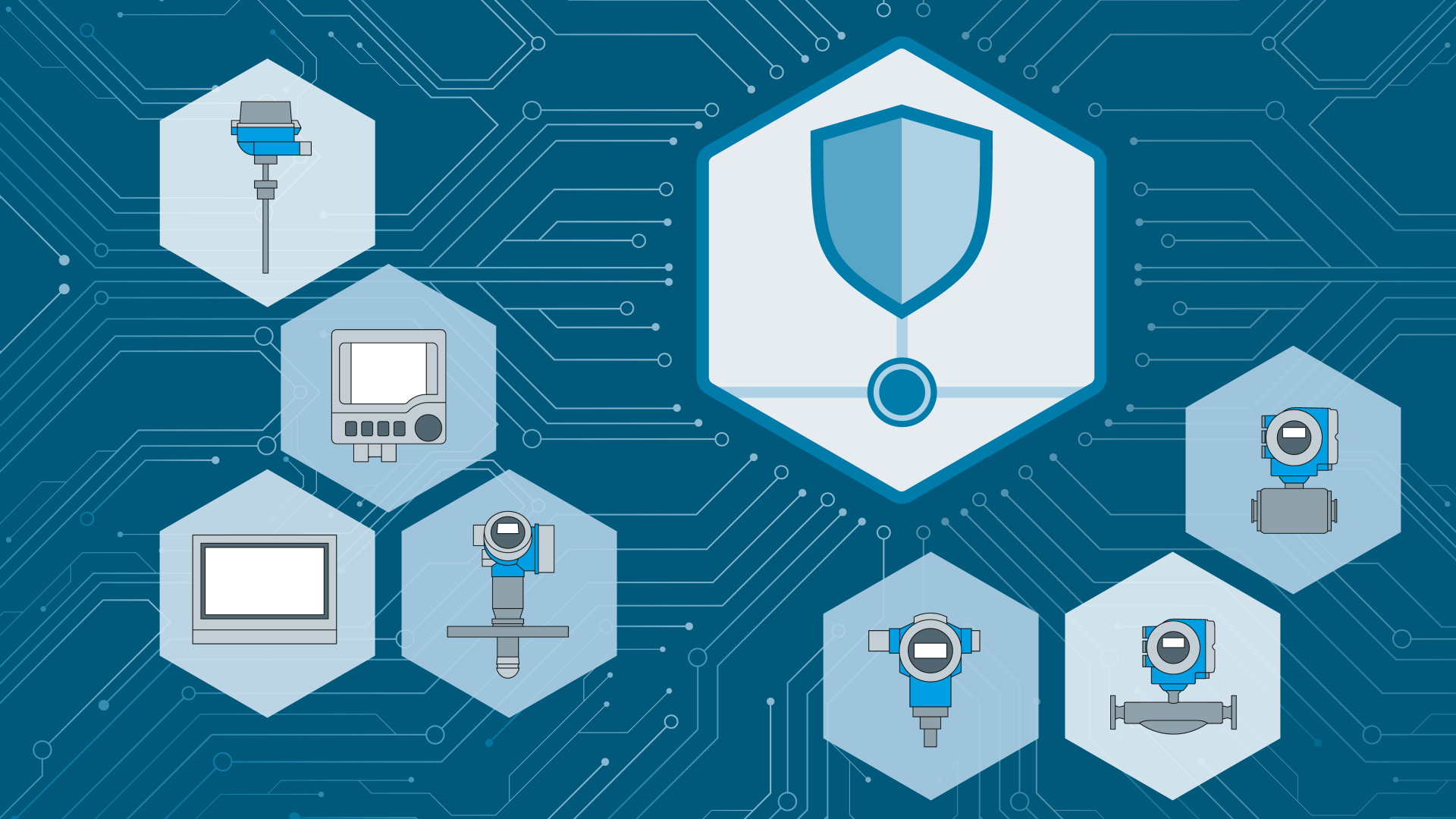
Cybersecurity is a top priority in the process industry
Digitalization offers the process industry many advantages. Instruments are increasingly interconnected, process data is available faster, and installations are easier to monitor than ever. At the same time, attention to cybersecurity is growing.
Whereas industrial installations used to be largely standalone, nowadays more and more systems, instruments, and platforms are being interconnected. This makes it easier to optimize processes and share insights, but also requires attention to digital security.
More connectivity, new challenges
With the growth of connected environments, the questions also increase. Which systems are linked to each other? Who has access to which information? And how do you ensure that process data remains available and protected?
As a result, cybersecurity no longer affects only the IT department. Engineers, operators, and maintenance teams also have to deal with it. After all, a secure installation is not just about protecting data, but also about the reliability and continuity of processes.
From awareness to insight
During WoTS, Endress+Hauser focuses on the role of cybersecurity within modern industrial environments. Using practical examples, specialists demonstrate the risks that can arise as installations become increasingly digitized, and how organizations can consciously address these risks.
This ties in with a question facing many companies: how do you benefit from the advantages of digitalization without losing control over security, availability, and reliability?
Digitization requires a secure foundation
Cybersecurity is an integral part of digitalization. Not as an extra step after the fact, but as a prerequisite for the reliable application of new technologies. This approach also forms the basis of ProtectBlue, Endress+Hauser’s cybersecurity framework for the secure and future-proof deployment of digitally connected instrumentation.