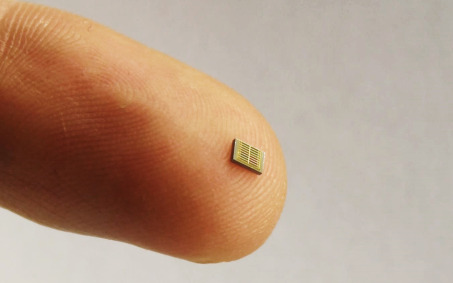
Photonics uses light instead of electrons, making chips smaller, faster, and more energy-efficient. This opens up new possibilities in the medical world and brings innovative healthcare applications closer to patients. Carol de Vries, Chief Strategy & Startup Support at PhotonDelta, explains how his organization is actively pursuing concrete applications, accelerating the development and deployment of the technology.
Photonics is the technology in which signals are no longer generated, transported or detected with electrons, but with photons (light particles). photonic integrated circuit (PIC) integrates all optical components, such as light sources, waveguides, filters, modulators, and photodetectors, onto a single microchip. This chip-level integration makes optical systems much smaller, faster, and more energy-efficient.
National Growth Fund
In the Netherlands, PhotonDelta is playing a prominent role in the development of this technology. The organization manages a €1.1 billion investment from the National Growth Fund to develop and scale the technology and is forming a network of companies and knowledge institutions. "We don't make chips ourselves," emphasizes Chief Strategy & Startup Support Carol de Vries. "We ensure the ecosystem functions well. We support startups, connect stakeholders, and invest from our fund in the early stages."
Although data communication and telecom are currently the largest markets, PhotonDelta is deliberately broadening its scope. "We're also explicitly looking at other domains," says De Vries. "Automotive, wearables, but especially medical applications and sensor technology offer promising opportunities. Healthcare, in particular, needs compact, energy-efficient, and reliable measurement solutions." Photonics can help address challenges such as an aging population, increasing demand for healthcare, and staff shortages.
Measuring blood sugar
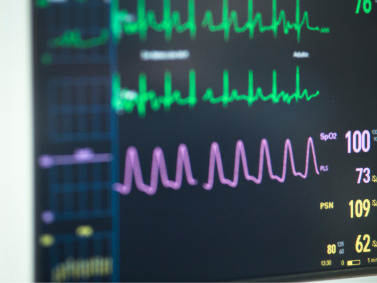
The medical applications of integrated photonics are impressive and diverse. Photonic chips can enable compact, sensitive, and energy-efficient measurement systems that function directly in or on the body.
One of the most celebrated opportunities is the development of a non-invasive sensor for measuring blood sugar. Instead of needle sticks or sensor implants, photonic measurements across a broad spectrum can indicate whether glucose levels are rising or falling. "There's a lot of work being done on this worldwide, because the market is enormous," says De Vries. "But as of yet, no solution is medically certified."
Patience and perseverance
Certification makes it difficult for many medical photonics applications to grow. Medical validation takes years, and startups can rarely sustain these processes independently. "If you want to get something certified, you really need to be patient," says De Vries. "That's why we're using part of the fund to support companies early on. But money isn't everything. You also need an entrepreneur with the perseverance to really see it through."
Point-of-care
De Vries sees photonics as having a profound impact on healthcare. Applications for home use or point-of-care are the most obvious. "Patients can then measure their own values without having to go to the hospital or their GP," he says. "There's a huge market for that in America, but in the Netherlands, we're more focused on insured care. An application has to truly deliver."
Furthermore, the growing staff shortage is forcing the sector to explore technological alternatives that can take work off their hands. But even then, success isn't a given. "Take a pressure ulcer mattress. If it's not practical for nurses, it won't be used," says De Vries. "The challenge, then, lies not only in properly functioning technology, but especially in its use and application."
Want to learn more about how integrated photonics will transform healthcare? Carol de Vries will be speaking at the Medical Technology Event on January 28th. In his talk, he will demonstrate how light-driven chips are creating new possibilities for point-of-care diagnostics, wearables, and smart sensor technology.