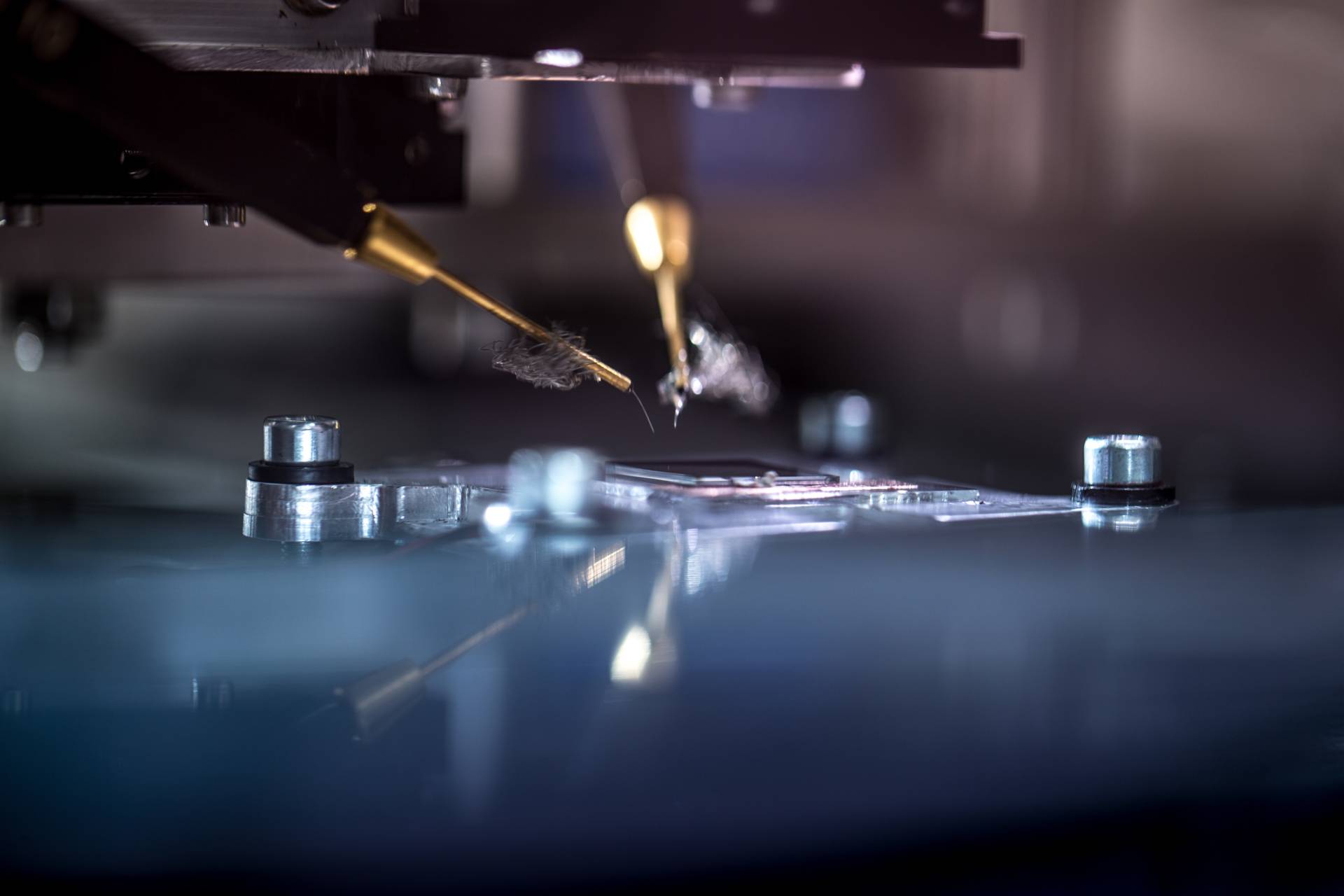
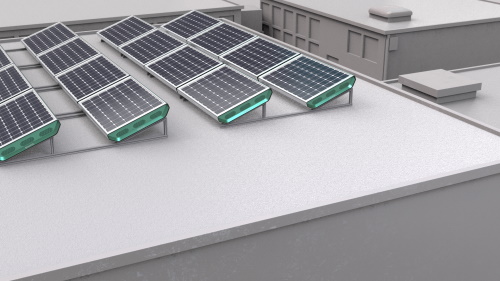
With a little help from the sun, start-up Solhyd promises to generate hydrogen in a sustainable way with a specially designed panel. The hydrogen is obtained by using water vapor in the air. Sander Van den Dries (Comate) and Jan Rongé (Solhyd) will tell us during WoTS 2022, where you can also visit the Hydrogen Square, about the development of these special panels.
By: Dimitri Reijerman
It Solhyd project started at KU Leuven. Rongé: “After an initial design, we came up with a panel that can be scaled up in production. The most effort was of course to make one first. But partly by getting in touch with Comate, we were able to move on. We thus left the lab phase.”
“The technology with which the hydrogen panel was developed was inspired by a dream that is very old. Attempts have been made to produce hydrogen using solar energy since the 1970s. The unique thing about our concept is that we can efficiently and affordably extract hydrogen in an applicable way.”
Sander Van den Dries, co-manager of Comate, who assists with further product development, adds: “Of course, there are electrolysers to make hydrogen. The unique thing about our hydrogen panels is that we have housed everything in one panel. So no water needs to be added. That is more efficient because you do everything directly. There are also no AC/DC converters needed for power. Everything is in one device.”
This also means that the potential of hydrogen panels is great, Van den Dries believes: “It works purely on the rhythm of the sun and you know that it is 100 percent green. We do not compete with green energy.”
Towards the market
However, there is still a lot of work to be done before the panels are actually on the roofs to generate hydrogen. Rongé: “The challenge now lies in scaling up to series production of these panels. We want to gradually move to larger projects in the coming years. But that will take at least five years. We mainly want to work on a project basis in the beginning. And we see many areas of application in industry. There is no shortage of space, but rather a lack of infrastructure.
 “We have been working on this project for ten years. No one was looking at generating hydrogen using the sun. Hydrogen came back into focus after the Paris climate agreement. Our project has received an extra boost due to the crisis in Ukraine and the sharply increased gas prices. Because we have to get off gas.”
Comate is working with Solhyd to get the panels on the market: “The first proof of concept shows how it works. Now the question is: how can we translate that into an optimized design. We are aiming for less than two euros per kilogram of hydrogen. And this concept is scalable.”
Rongé: “We will have to switch to green hydrogen and we want to produce it as efficiently and cheaply as possible. In principle, we can generate our own hydrogen, on any scale. There is now a polarized debate going on about the pros and cons of hydrogen. We say: look for the right sustainable energy source and carrier for each application.”
And about the future, both gentlemen are positive, but realistic: “We have become systematically more ambitious,” says Rongé. “The sense of urgency in society is increasing. But we do know how long it takes to develop technology.”
Do you want this lecture and others on Wednesday, September 28? Register you for a free visit to the WoTS 2022 trade fair.
Related companies