The trade fair gadget unraveled: the technology behind the HexaGlow

The main attraction of Electronics & Applications 2023 is the trade fair gadget 'HexaGlow': an interactive coaster that lights up when someone places a cup on it. The HexaGlow is exclusive to E&A designed and will only be presented during this edition of the fair. In this article we explain how the gadget came about and lift a corner of the technical veil.
The design of the HexaGlow
The idea of the gadget comes from the creative mind of Ideetron BV. Director Bart Hiddink was inspired ten years ago by a video about an interactive table that lights up as soon as you place an object on the top. A playful and practical idea.
The technology is not based on traditional wiring but on sensors that communicate with each other via a neural network. As soon as an object comes into contact with a sensor, it sends a signal to the other sensors, which in turn activate the LED lights. Not a complex technology, but this simplicity is precisely the strength of the gadget. The six-pointed shape allows the sensors to make contact easily and the LEDs come on almost simultaneously.
Due to lack of time, the idea ended up on the shelf, but that changed when a group of enthusiastic exhibitors started looking for a suitable idea for the trade fair gadget for 2023. When Hiddink came up with his idea for the interactive coaster, everyone was immediately enthusiastic, especially because of its practical applicability.
The design is now ready and forwarded to the next partner: Eurocircuits. They are responsible for the printed circuit boards and the production of the first prototypes.
How is the PCB constructed?
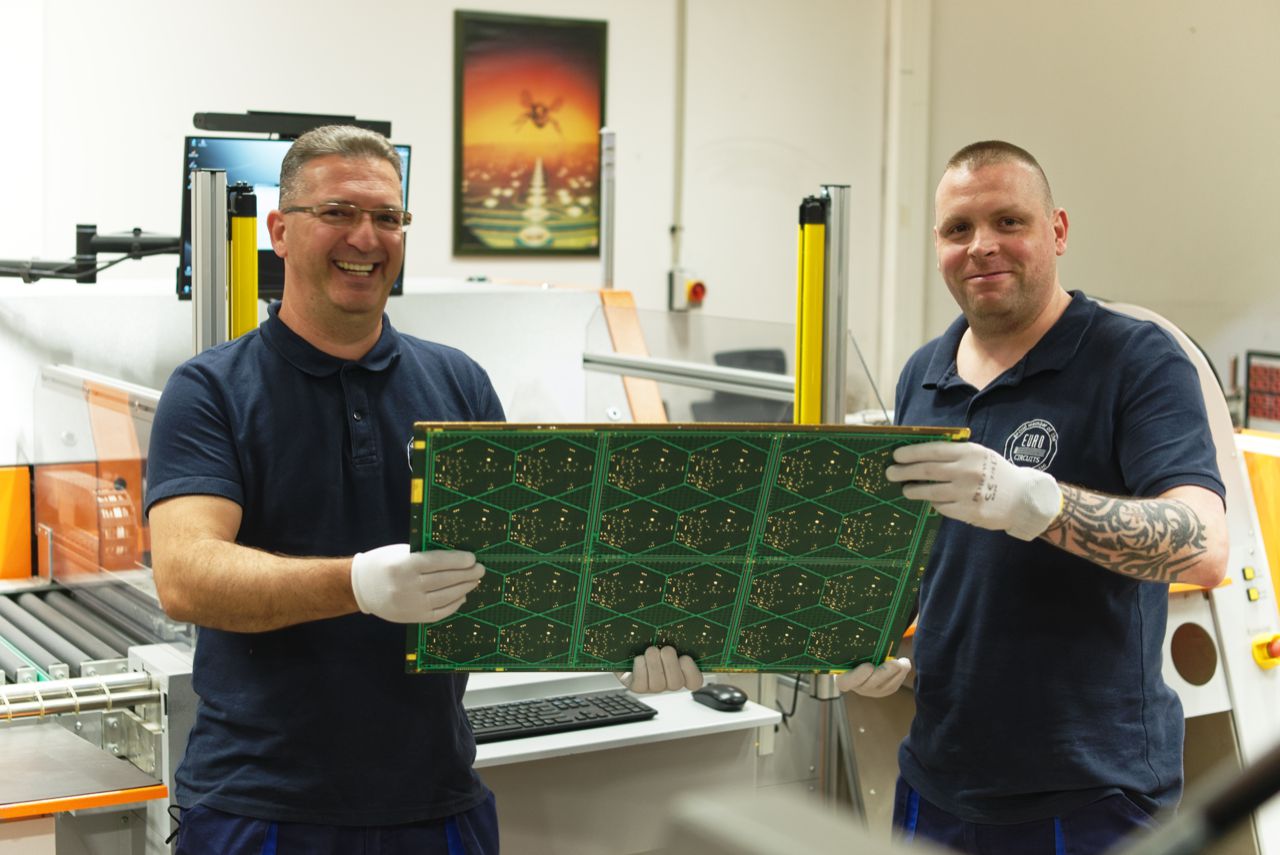 The 'heart' of the HexaGlow is the PCB on which both the components and the LED lights are mounted. The well-known printed circuit board specialist Eurocircuits is responsible for the production of the PCBs. They cut the printed circuit boards in hexagon form from a large panel after which they are sent to A1 Electronics., the producer of the gadget.
Eurocircuits is one of the few PCB specialists in Europe that focuses on smaller productions. All data, including the BOM (bill of materials), is supplied by Ideetron. No physical contact is involved, because the data is uploaded to the digital platform of Eurocircuits.
The EMS department of the Belgian PCB company then carries out the checks and sets up the machines.
An exciting moment, because once the first prototypes roll off the production line it will become clear whether the idea actually works in practice.
The prototypes are then tested by Ideetron and only when testing is completed does component and housing supplier Comdes Componenten start working on the housing.
The special housing of the HexaGlow
.jpg) We all have a square or round coaster at home, but a six-pointed shape is unusual and stands out. The designers of Comdes Components have used all their creativity to create a beautiful and functional housing. And they succeeded!
We all have a square or round coaster at home, but a six-pointed shape is unusual and stands out. The designers of Comdes Components have used all their creativity to create a beautiful and functional housing. And they succeeded!
The housing consists of two parts: a black bottom with clips on the inside where you click the PCB in. This is not only easy, because screws are no longer needed, but also functional. The PCB stays in place and is well resistant to moisture from the bottom.
The top is white and also contains clips. You 'click' the two sides together, with the top of the housing clamping the bottom, just like a lunch box. This construction makes the HexaGlow waterproof. Very handy if a cup of liquid falls over!
The designers at Comdes Components have retained the hexagon shape, but the corners of the housing have been made a bit smoother to make it more aesthetically pleasing.
If you look closely, you will see that the top has two tiny circles of transparent plastic. The sensors are underneath.
Caps on the bottom of the housing prevent the coaster from sliding when you place an object on it. The caps are supplied by Conrad and are recessed into the housing.
Every detail has been taken into account, as there is also a protective foil sticker on the top in case the coaster comes into contact with hot liquid. The sticker contains two transparent circles for the sensor openings. Schurter Electronics supplies the unique foil sticker that is tailor-made for the HexaGlow.
The gadget is almost ready now. Comdes Components is putting the finishing touches to the production of the mold, but of course the PCB of the gadget still has to be tested by VDL TBP electronics.
Testing the gadget
 Have you always wanted to know how testing a PCB works? Then come to the production square at the E&A fair. Electronics specialist VDL TBP there will be a working one test fixture (test bench) that was specially designed for the HexaGlow.
A production line is set up on the production square that produces the PCBs live produce. At the end of this row is the test fixture which checks whether the PCBs meet all functional requirements. A total of 750 printed circuit boards are tested at the fair, after which the visitor can assemble the gadget on site. A unique opportunity to see the entire process, from empty board to working and tested PCB, with your own eyes.
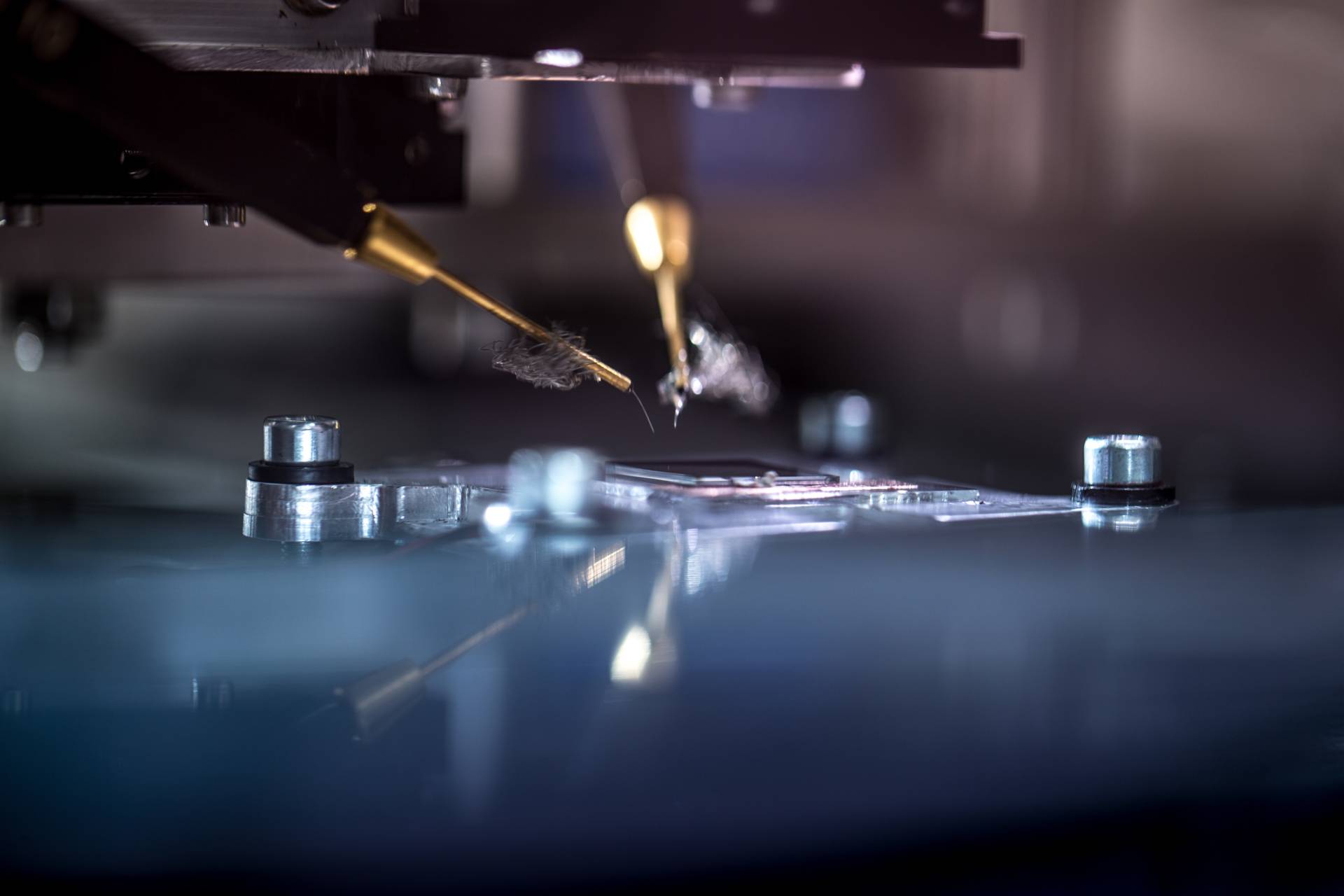
The testing is done with test probes: copper rods that connect a printed circuit board to the test machine and are precisely matched to the design of the PCB. This is very precise, because if a test probe If it deviates by just half a millimeter, the printed circuit board will break during testing
VDL TBP electornics tests a total of 750 printed circuit boards on the production square. The remaining PCBs are tested on location in advance.
The test phase is the final step for the production of the gadget by A1 Electronics. We will tell you more about this soon. We will also show a video of the actual production of the gadget at A1 in Almelo.
Would you also like to have a unique HexaGlow coaster in your home? Then register for free for a visit to the E&A fair.
Related companies

-thumb.png)