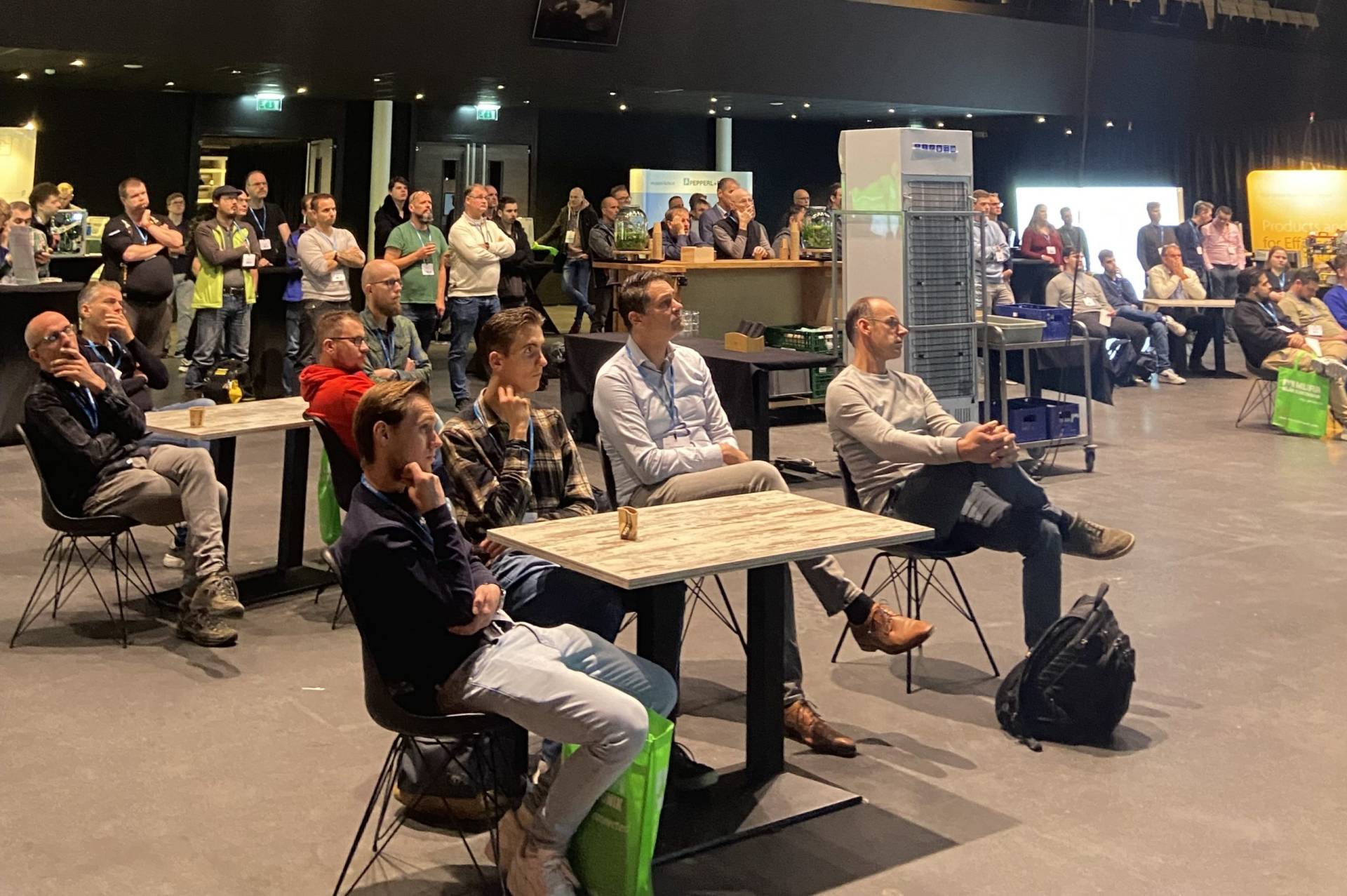
Power Electronics & Energy Storage 2026: a system-level perspective on the energy transition

The Power Electronics & Energy Storage event 2026, hosted by FHI, once again proved its value as a technical forum where system-level challenges in electrification are addressed head-on.
Bringing together experts from industry, academia and engineering practice, the program offered a dense sequence of lectures covering converter technology, battery innovation, grid integration and thermal management. Topics that are increasingly inseparable in modern energy systems.
A program built around system integration
The strength of this year's program lay in its explicit focus on the interaction between components rather than isolated technologies. Sessions ranged from grid-forming converter control strategies and frequency regulation mechanisms to advances in supercapacitors and multi-level converter design.
Early keynote contributions set the tone by addressing the growing complexity of energy infrastructures. Topics such as adaptive control for grid-forming converters and the impact of high-power systems on grid stability highlighted the shift from component optimization to system orchestration.
Parallel sessions reinforced this perspective. Presentations on thermal design constraints, SiC-based switching control, and battery integration emphasized that reliability in next-generation systems is no longer determined by a single design domain, but by the interaction between power electronics, materials, control software and environmental conditions.
The recurring theme across the program was clear: achieving scalable electrification requires multidisciplinary optimization, particularly in the face of grid congestion, higher power densities and increasingly dynamic load profiles.
From components to energy architectures
Another notable aspect was the attention given to energy storage technologies and their role in enabling flexible, resilient energy systems. Sessions on redox flow batteries, supercapacitors and DC integration illustrated how storage is moving beyond buffering towards active participation in grid stability and power quality control.
At the same time, discussions on modeling and measurement, such as impedance-based system analysis and visualization techniques, highlighted the need for deeper insight into system behavior under real-world operating conditions. This reflects a broader trend: engineers are increasingly required to design not just hardware, but predictive and adaptive systems.
Spotlight: Megawatt-level Charging for Trucks
A central highlight of the afternoon program was the keynote “Megawatt-level Charging Technology for Trucks” by Dr.ir. Gautham Ram (TU Delft). Positioned at the intersection of power electronics, mobility and infrastructure, this lecture captured one of the most urgent engineering challenges in electrification.
The presentation outlined how the rapid electrification of heavy-duty transport is driven by advances in battery technology, high-power charging systems and policy mandates.
However, it also made clear that scaling charging to the megawatt level introduces entirely new system-level constraints.
Key technical insights included:
- Charging power and standards: The transition from conventional charging systems to megawatt-scale solutions such as the Megawatt Charging System (MCS) demands new standards, connectors and communication protocols tailored to high-current, high-voltage operation.
- System architecture: The use of medium-voltage solid-state transformer-based charging architectures was highlighted as a promising route to efficiently convert and distribute power at these scales.
- Integration challenges: Ultra-fast charging is not merely a charger design issue, but a grid integration challenge. The lecture addressed how coupling megawatt chargers with local PV generation and energy storage can form energy hubs that mitigate grid impact.
For technical experts, the significance of this session lay in its holistic framing. Megawatt charging is not just about increasing power levels; it requires coordinated innovation across grid infrastructure, converter technology, thermal management and control systems. It exemplifies the broader engineering shift from device-level optimization to integrated energy ecosystems.
Concluding reflections
The 2026 edition of Power Electronics & Energy Storage demonstrated how rapidly the field is evolving from component innovation to system-level engineering. Across the program, the same message emerged: the energy transition is no longer constrained by individual technologies, but by the capability to integrate them into stable, scalable and efficient systems.
By combining deep technical sessions with forward-looking keynotes, the event provided a comprehensive overview of where the field stands today and where the next engineering challenges will arise. For professionals working in power electronics and energy systems, it reaffirmed that future competitiveness depends on mastering complexity at every level of the energy chain.