Embedded Software & Cybersecurity

During the Embedded Software & Cybersecurity seminar, we delve into the world of secure and robust embedded systems. Three experts will guide you through current trends and challenges, including the impact of the European RED Directive. An ethical hacker will demonstrate live how vulnerabilities in embedded devices are exposed and how attacks can be prevented. You'll also learn how smart software solutions help meet stricter security standards and securely update firmware. This session is essential for anyone who wants to design secure and reliable embedded systems.

Faraday | Tuesday, September 22, 13:00 – 14:30
13.00 – 13.30

From prompt to model: AI-driven requirements engineering in a model-based world

Generative AI is changing the way we define requirements: from standalone text documents to an interactive process in which AI helps formulate, structure, and maintain the consistency of requirements. But text alone is not enough — embedded software requires traceability and verification. In this lecture, I will show how AI and model-driven development reinforce each other: AI-generated requirements that land directly in a SysML/UML model, while maintaining traceability to architecture and testing. Drawing on practical experience with IBM Rhapsody and SAM (SodiusWillert), I will explain how an AI assistant collaborates directly with the model environment via open protocols — and what that means for the role of the engineer.

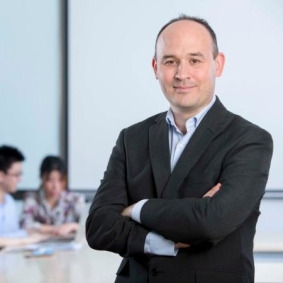
Speaker: Walter van der Heiden – VDH Informatica BV


13:30 – 14:00

AI-Assisted Refactoring for Coupling Reduction: Integrating DSM Analysis with the Model Context Protocol and Reinforcement Learning

Software architecture erosion—the gradual accumulation of coupling and violation of architectural constraints—remains a persistent challenge in large-scale software development. This paper presents an AI-assisted approach to architecture management that integrates Dependency Structure Matrix (DSM) analysis with large language models (LLMs) through the Model Context Protocol (MCP). We formalize coupling minimization as an optimization problem and propose the Recursive Hierarchical Decoupling Algorithm (RHDA) for systematic coupling reduction.

Beyond rule-based refactoring, we formulate the problem as a constrained Markov decision process (CMDP), enabling reinforcement learning agents to discover refactoring sequences that minimize coupling while preserving system test integrity. The approach is validated through a CI/CD pipeline that verifies both functional correctness and architectural improvement.

A case study on an embedded systems library demonstrates practical benefits: the AI agent identified layer violations, explained their architectural significance, and proposed concrete refactoring solutions that reduced coupling metrics while maintaining system behavior.

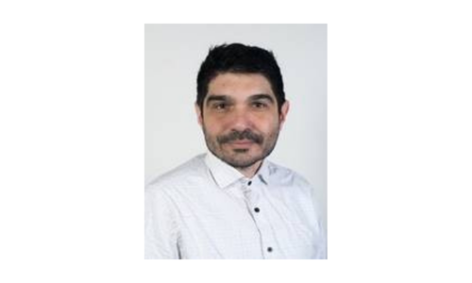
Speaker: Neil Langmead, Co-Founder CodeClinic


2:00 PM – 2:30 PM

Trust, but Verify: Keeping AI-Generated Embedded Code Correct, Safe and Compliant

AI assistants have moved from suggesting lines to acting on the codebase: today's agentic tools write, refactor, and run tests on their own. They can compress hours of embedded C/C++ work into minutes — but they raise an unavoidable question for any team shipping safety- or security-critical firmware: can you trust what the agent produced, and can you prove it?

This session looks at where productivity meets accountability. Starting from a realistic AI-assisted workflow, it shows how to keep verification in the loop rather than bolted on at the end: static analysis to catch defects and coding-standard violations early, runtime checking to expose errors that surface only during execution, automated testing for fast regression feedback, and MISRA/CERT compliance treated as a continuous gate. Examples use IAR's analysis and verification tooling (C-STAT, C-RUN) to make the principles concrete. For teams developing to ISO 26262, IEC 62304 or IEC 61508, the same discipline, backed by a certified compiler and the application of its functional-safety guide, is what lets AI-assisted code stand up inside a safety case.


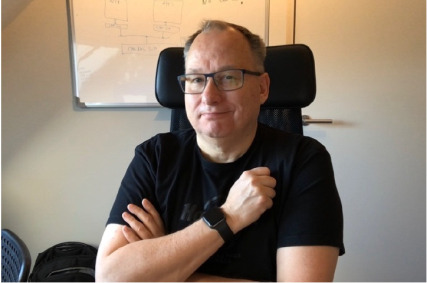
Speaker: Dr. Marc THOMAS

Embedded Security Field Application Engineer – EMEA
IAR Systems France — A Qt Group Company

FHI, federatie van technologiebranches