From model to machine: how TNO designs the production systems of tomorrow with LSAT and AI
By: Hans Risseeuw
In the high-tech manufacturing industry, everything revolves around performance. It is not just the speed of a robot arm or the accuracy of a process step that counts, but above all how all those components function together as a single unit. According to Bram van der Sanden, a researcher at TNO-ESI, that is precisely where the challenge of modern machine building lies: optimizing overall system behavior.
Van der Sanden has been operating at the intersection of science and industry for years. During his doctoral research, he worked at both TU Eindhoven and ASML, where he focused on models for wafer logistics and the productivity of complex machines. The goal: to no longer base design choices solely on experience, but to substantiate them with models that make a system's behavior predictable.
The system conductor
This way of thinking led to LSAT (Logistics Specification and Analysis Tool), a model-based development environment that TNO-ESI developed together with ASML and TU Eindhoven, among others. LSAT makes it possible to analyze how a production system will behave and where bottlenecks arise at an early stage. According to the developers, the tool acts as a kind of 'system conductor': an aid to make all subsystems and resources work together as a well-orchestrated whole.[1]
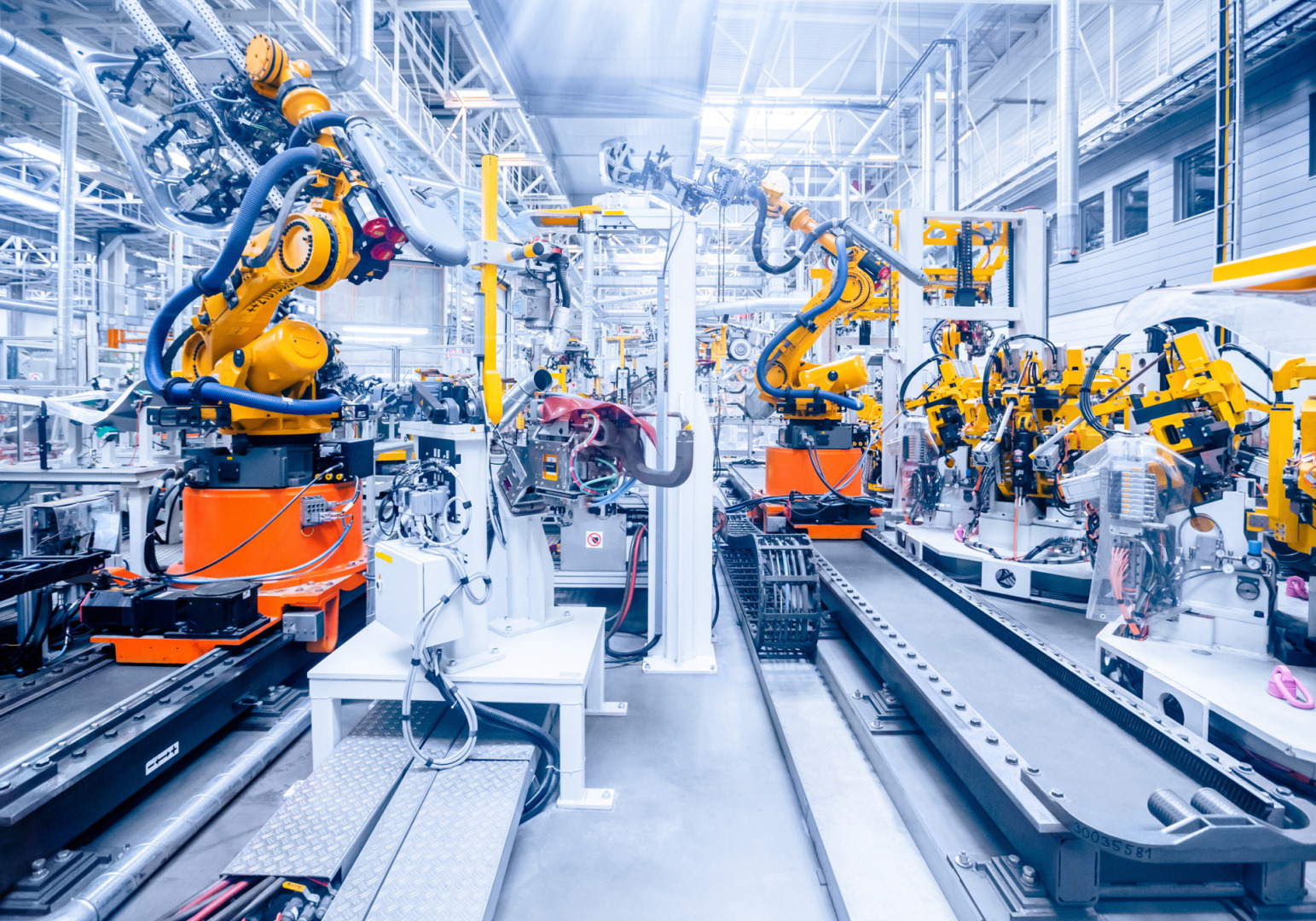
LSAT has been specifically developed for flexible production systems. Users model resources such as process stations, robot arms, and transport systems, including their movements, capacities, and time profiles. The system can then analyze the consequences of design choices for lead time, throughput, and bottlenecks.[2]
According to van der Sanden, the distinction from traditional simulation packages lies primarily in the focus on production logistics. Concepts such as motion profiles, resources, and product flows are immediately available, allowing engineers to gain actionable insights more quickly.
Not more models, but better decisions
Interestingly, during his career, Van der Sanden learned that a model does not always need to be as accurate as possible. In the academic world, there is a tendency to add ever more details, but in practice, it revolves around the question of whether extra information actually leads to better decisions. At a certain point, a prediction is accurate enough to weigh risks and make design choices.
This pragmatic attitude aligns with the role TNO envisions for itself: translating fundamental knowledge into industrial applications while simultaneously stimulating knowledge exchange between companies. Thanks to long-standing collaborations with parties such as ASML, Canon Production Printing, Philips, Thales, and Vanderlande, cross-connections are created that individual organizations often cannot organize on their own.
AI lowers the entry barrier
However, model-based working faces a persistent problem. The power of models is great, but someone has to build them. And that is precisely what takes time, expertise, and training. Many engineers perceive the learning curve as an additional problem on top of the technical issue they actually want to solve.
Therefore, TNO is currently working on an AI assistant for LSAT. The first proof-of-concept is now ready. Instead of manually building a model, an engineer will soon be able to describe what a system looks like in natural language. The AI asks additional questions, checks input for consistency, and then automatically generates a valid LSAT model.
According to van der Sanden, this is not about replacing engineers, but about making model-based engineering accessible. “The power of model-based working is already there. AI makes that power more easily accessible.”
Cautious optimism
Interestingly, TNO remains level-headed about the further deployment of AI for optimization. Experiments with reinforcement learning show that advanced AI techniques do not automatically outperform relatively simple heuristics. Researchers are currently examining exactly where that boundary lies.
Perhaps that is the most important lesson from van der Sanden's work: technology is not an end in itself. Ultimately, it is not about the smartest algorithms or the most detailed models, but about better design decisions. True innovation lies not only in the machine, but in the ability to make complex systems understandable and manageable. And for that, a good system conductor still proves indispensable.
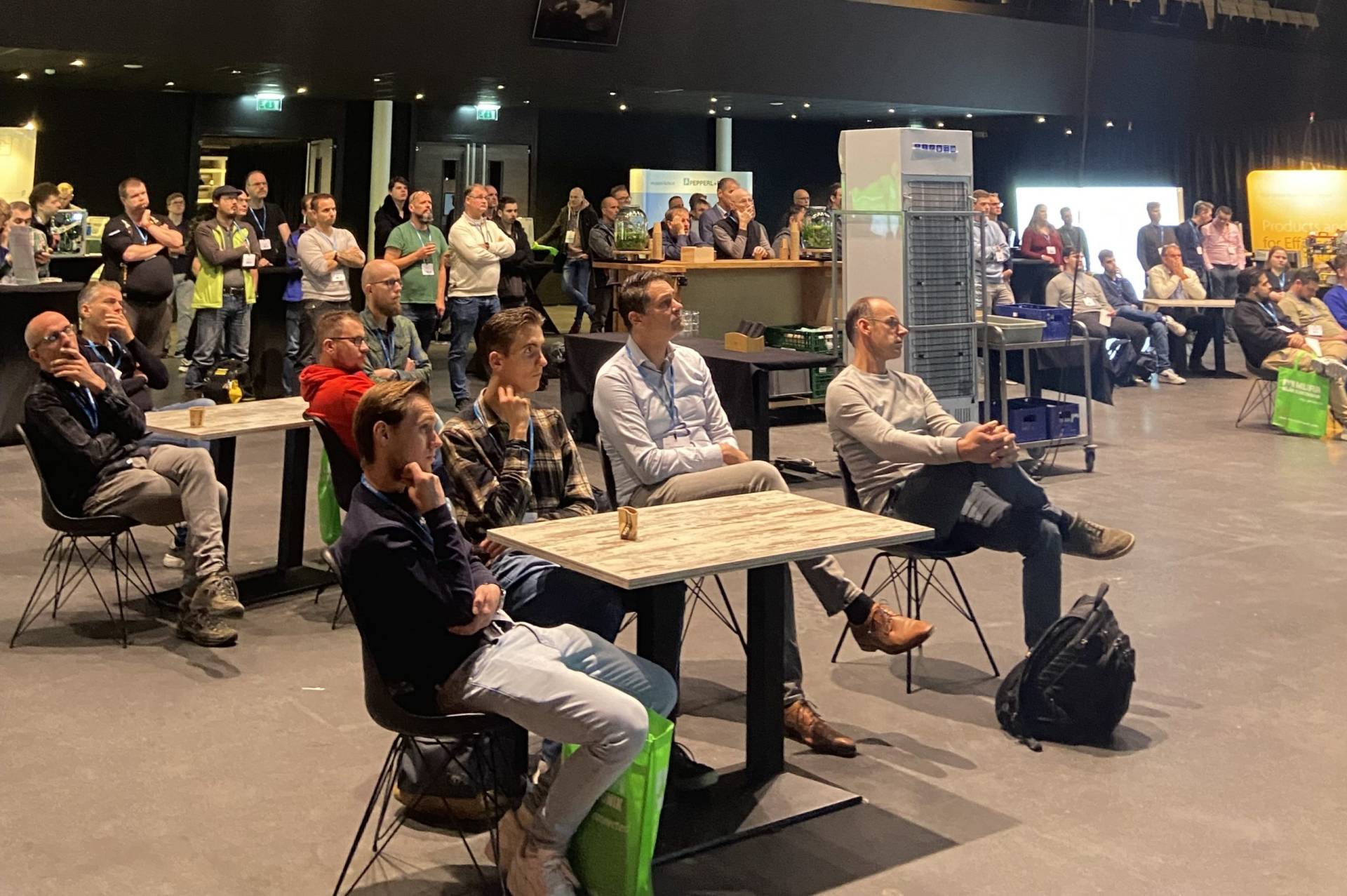
Bram van der Sanden will give the plenary lecture at the FHI Machinebouw event on December 1, 2026, at Congrescentrum 1931 's-Hertogenbosch.
[1] The System Conductor – High-Tech Systems Magazine
[2] Eclipse LSAT™ IDE – Modeling, Analysis & Optimization Tool for Supervisory Controllers – TNO-ESI