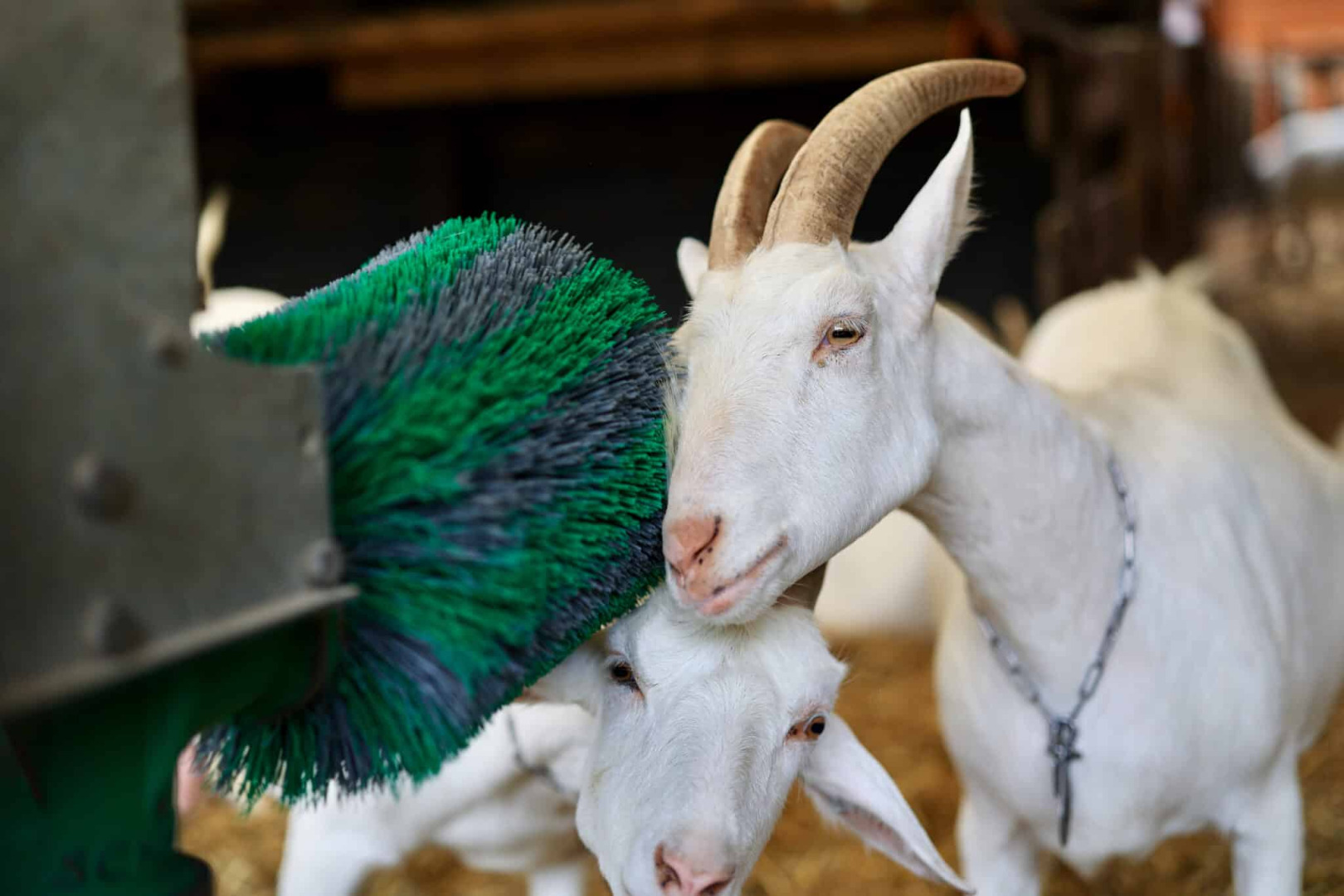
From motors to gears: The secret behind the smile of 'the Happy Goat'‘
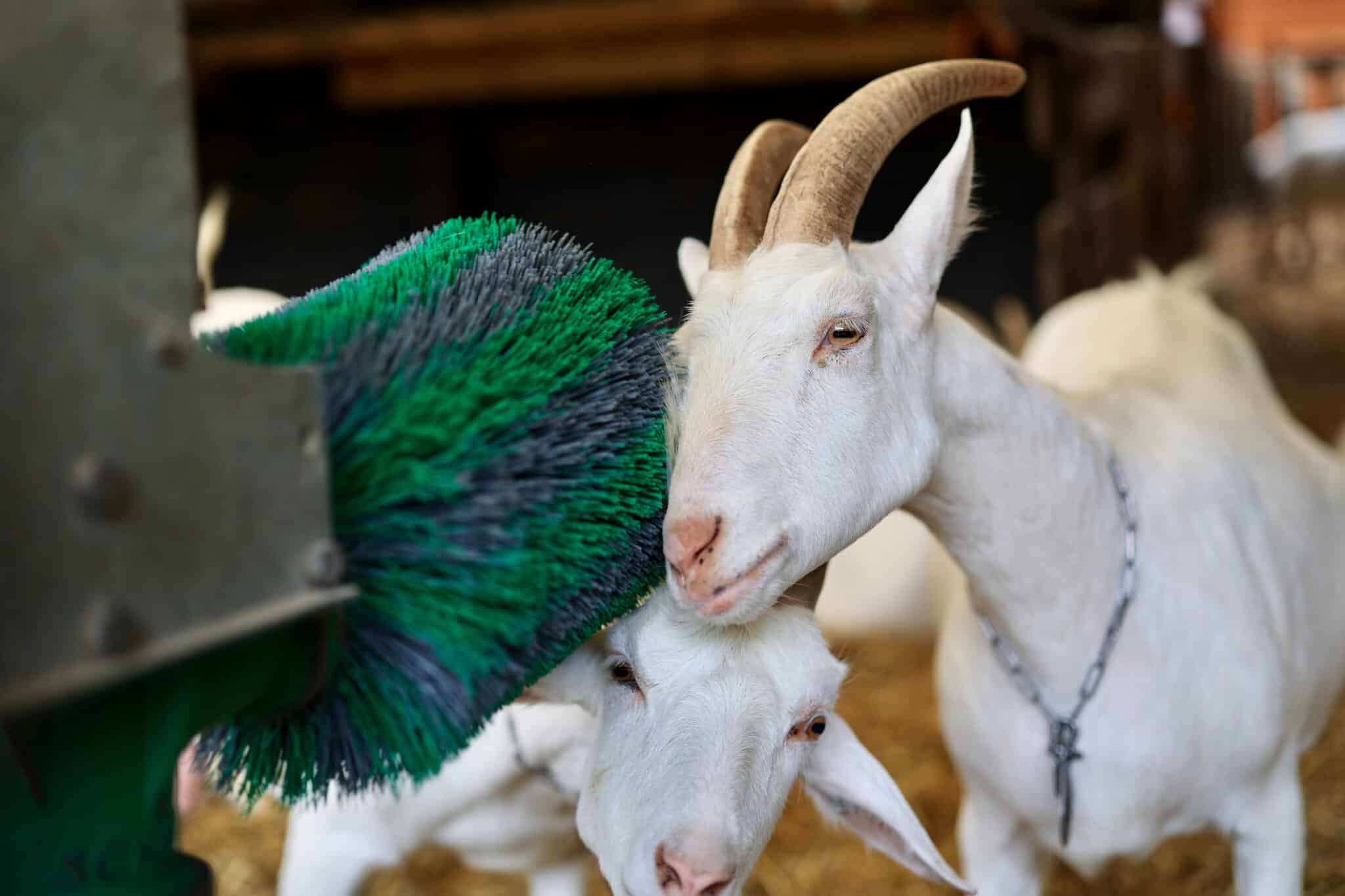
A cow standing enjoying itself under a rotating brush, a goat contentedly having its coat groomed – it seems simple, and that is exactly the intention. But behind that seemingly effortless movement lies a world of drive technology. For a good cattle brush doesn't just rotate; it rotates at the right speed, the right torque, and the right reliability. Day in, day out, in an environment that is unforgiving of fragile technology.
In this article, we take you through the drive components that bring cattle brushes to life – from motor to gear – and the factors that determine whether a system keeps running or grinds to a halt. Because at Zilvertron, we know: wherever there is movement, there is a drive behind it. And in livestock farming, that drive is the difference between a brush that works and a brush that works with pleasure.
Why drive technology is the heart of every cattle brush
A livestock brush performs multiple functions simultaneously: it cleans the skin, massages, and provides the animals with activity and entertainment. All these functions are only possible when the drive system delivers the right power and movement—smooth, adjustable, and resistant to dust, moisture, and temperature fluctuations. A well-designed drive system means not only smooth operation but also a longer brush lifespan and reduced downtime for the livestock farmer.
The core always consists of two elements: a engine which converts electrical energy into mechanical motion, and a gear transmission – or reduction gear – that translates that motion into the correct rotational speed and torque at the brush head. Surrounding that are components such as amplifiers, controls and power supplies, depending on the complexity of the application.
Motors: the power behind the movement
The motor is the starting point of every drive system. In livestock brushes, we mainly see three types recurring, each with its own characteristics that determine where they perform best.
DC motors They are robust, affordable, and relatively easy to adjust. For standard livestock brushes with a fixed or limited speed setting, these are often the first choice. Their reliability in harsh environments — such as an open barn with dust and moisture — makes them popular in the agricultural sector. Within our range, we supply DC motors from renowned brands, in various sizes and power ratings, with or without built-in reduction.
Stepper motors offer greater precision and control over position and speed. When a brush system operates with different modes or directions, for example alternating left and right, or with variable speeds depending on the smoothness of the coat — provide stepper motors The flexibility you need. They are making a major comeback, and rightly so: the price-performance ratio is excellent.
Servomotors come into play in complex systems where precise control and feedback are essential. Think of brushes that react to the presence or movement of the animal, with encoders and feedback systems that monitor the pair or the position. The investment is higher, but the intelligence and security of the system are also not unimportant in an environment with live animals.
In addition, remain AC motors A solid option for simple, continuously rotating brushes where adjustability is secondary and reliability comes first.
Gears and reductions: from speed to force
The motor provides the movement, but the gear transmission determines what that movement ultimately does. Delays ensure the transfer of power from the motor to the brush head, whereby rotation speed and torque are adjusted to the application. A motor that rotates too fast makes the brush aggressive and uncomfortable for the animal. A motor that rotates too slowly, on the other hand, eliminates the massage effect. The right deceleration strikes the balance: sufficient torque to overcome resistance, sufficient slowness for pleasant brushing.
Within our range, we supply delays of, among others. NewStart, in various designs and ratios. In addition, couplings play an important role: they make the connection between the motor and the transmission more flexible and absorb shocks – think of the moment a cow leans against the brush with full force. Such peak loads must be absorbed somewhere, and a well-chosen coupling significantly extends the lifespan of the entire system.
Control and amplification: the brain behind the movement
A motor rotates, but how fast, in which direction, and at what moment is determined by the control system. For simple brush systems, a basic one suffices. motor amplifier or driver, such as our own ZCS series of universal DC brushed motor controllers. These are designed to be problem-solving and universally applicable: plug and play, without unnecessary complexity.
For systems that require more intelligence – think of programming rotation directions, timers, or connection with sensors – we offer controls and HMI panels from Kinco, including IoT functionalities. This allows you to connect the brush to a barn climate system, a milking robot schedule, or a simple mobile app for the livestock farmer.
And then there is the power supply: the silent force behind everything. A switched-mode power supply that provides sufficient stability, even during voltage fluctuations that are a reality in agricultural environments, is not a luxury, but a necessity.
Selection criteria: what should you look out for?
When assembling a drive system for livestock brushes, more factors come together than you might think at first glance. The most important:
Application and requirements: What is the intended purpose of the brush? What speed, torque, and accuracy are required? The components must align with the physical needs of the animal as well as the construction of the brushing system.
Engine selection: Select the motor based on the required torque, desired speed, and desired controllability. A DC motor suffices for simple applications; a stepper motor or servo motor offers more possibilities if the system needs to become more intelligent.
Power supply and voltage: cCheck the available power source in the barn. Not every motor fits every power supply, and the power supply must be able to withstand the fluctuations typical of agricultural networks.
Accuracy and feedback: When the brush needs to react dynamically, for example stopping or changing direction upon contact, encoders or feedback systems are required. This requires a motor and control system that can handle this.
Environmental factors: Dust, moisture, temperature fluctuations, ammonia fumes: a stable is not a clean room. Choose components with the correct degree of protection (IP rating) and materials that are resistant to corrosion and dirt.
Lifespan and maintenance: Brushless motors require less maintenance than brushed motors, but the same applies to the price. Weigh the total cost of ownership against the initial investment. A system that generates downtime twice a year is ultimately more expensive than a more robust alternative.
Integration: Ensure that all components – motor, amplifier, control unit, power supply – work together seamlessly. A motor that formally complies but does not communicate with the control unit causes problems in practice. It is precisely on this point that our engineers can provide input right from the design stage.
Safety: Emergency stop systems and safety measures are not optional. A brush that animals use voluntarily must stop safely as soon as something goes wrong, not tomorrow, but now.
From component to complete solution
The difference between a brush that rotates and a brush that really works lies in the alignment of all components with each other and with the application. And that is precisely where Zilvertron lies: not just supplying individual components, but thinking proactively from the perspective of the application.
With more than 30 years of experience in precision drive technology, its own R&D department With both mechanical and electronic engineers, and a product range spanning from motors and gearboxes to amplifiers, controls, and custom electronics, we help OEMs and livestock suppliers turn a collection of parts into a reliable, well-functioning system. Whether it involves a standard solution from the catalog or a customer-specific developmentYour application takes center stage.
And that is ultimately what makes the difference: not the individual motor or the gear, but the way everything moves together. Smooth, robust, and just good enough to make a goat happy.
Because happy goats – that’s what we’re working on. With drive technology that is just as reliable as that smile suggests.