Mechanical engineering is changing already at the drawing board.
By: Hans Risseeuw
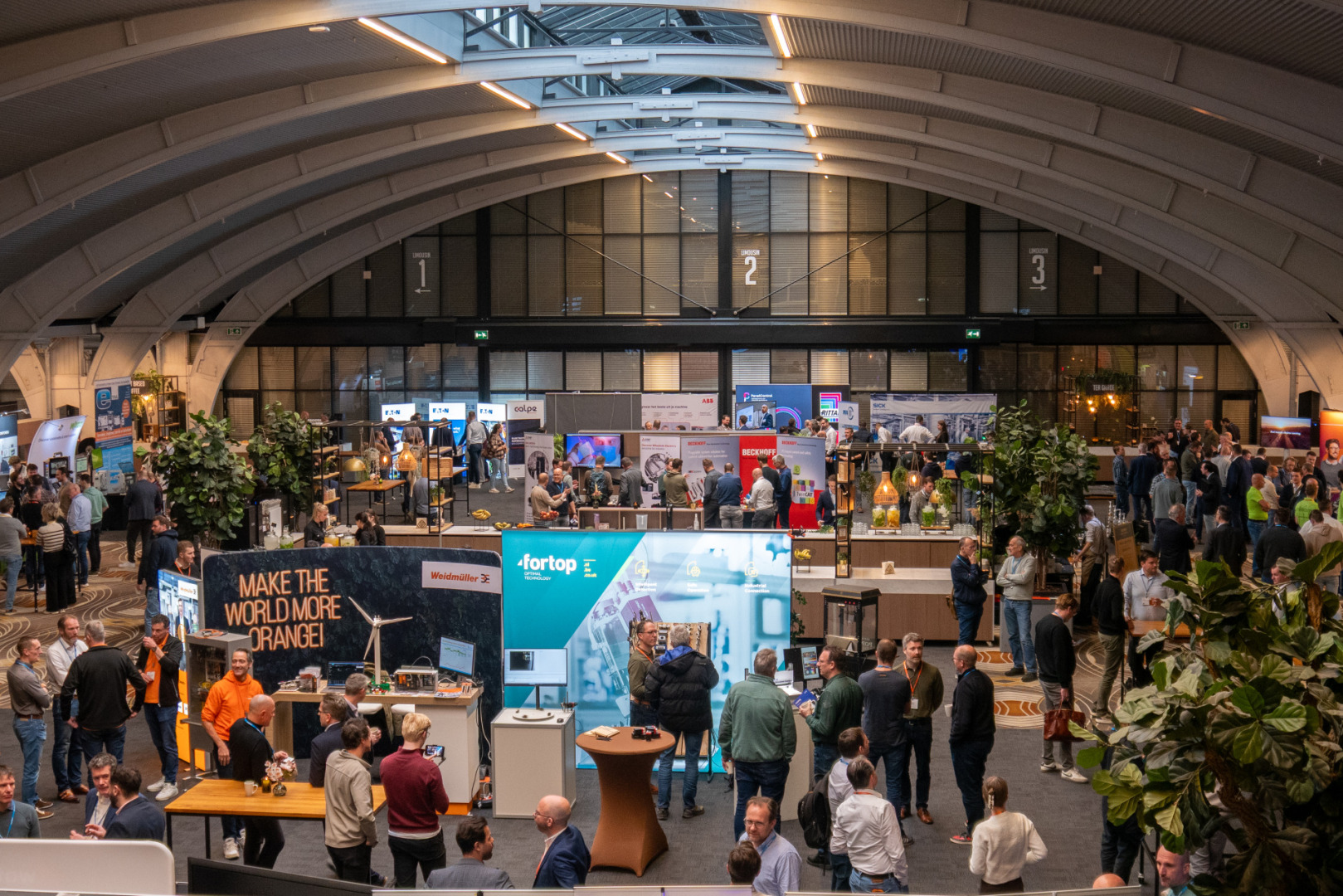
Machines must be capable of more, while their complexity increases. Product variants, digitalization, stricter cybersecurity requirements, and a growing volume of data are interacting ever more strongly. Therefore, the FHI Machinebouw Event on December 1 at Congrescentrum 1931 in 's-Hertogenbosch will focus not only on new technology, but primarily on the question of how machine builders keep that complexity manageable.
An important part of the answer lies at the very beginning of the development process. TNO demonstrates how Model-Based Engineering and generative AI can help engineers analyze and optimize design choices early on. AI is used to generate, analyze, and improve models.
Software development is also changing. In another session, community-driven PLC development takes center stage. The premise: why should every machine builder develop the same software functionality individually when proven modules and knowledge can also be shared and reused?
Intelligence is shifting
At the same time, machine architecture is changing. For years, more and more functionality ended up in the central PLC. Turck shows how smart sensors, I/O modules, and decentralized subsystems can now make local decisions, while the PLC handles the coordination of the whole. Murrelektronik extends decentralization to the physical installation, where controls, sensors, and actuators are placed directly on the machine.
This digitalization also places different demands on the design. HMS Networks addresses network segmentation as part of the machine architecture and explains the relationship with the Machinery Regulation and the Cyber Resilience Act. Phoenix Contact discusses IEC 62443 and the selection of products based on cybersecurity functionality. EMC also receives attention: more sensors, frequency converters, and communication systems increase the risk of electromagnetic interference.
From technology to organization
However, a better machine is not solely a technical challenge. This is evident from the practical experience of MPac Langen and Yellax with engineering optimization. Modularizing, standardizing, and automating sounds logical, but in practice, they also lead to discussion, resistance, and choices whose outcome is not always predetermined. EPLAN and Rittal, too, explicitly link digitalization to the people who have to work with it.
It program The Machine Building Event thus makes one development in particular visible: software, hardware, data, cybersecurity, and engineering are becoming increasingly intertwined. As a result, the choices made at the drawing board increasingly determine what a machine can do later on.


