FHI Member Benefits
Benefit from the services of FHI and other supporting services designed to support your business.
By: Hans Risseeuw
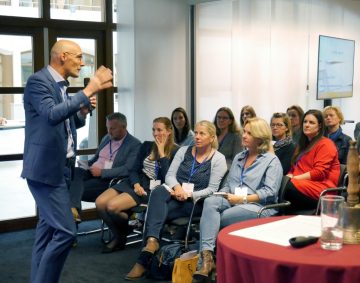
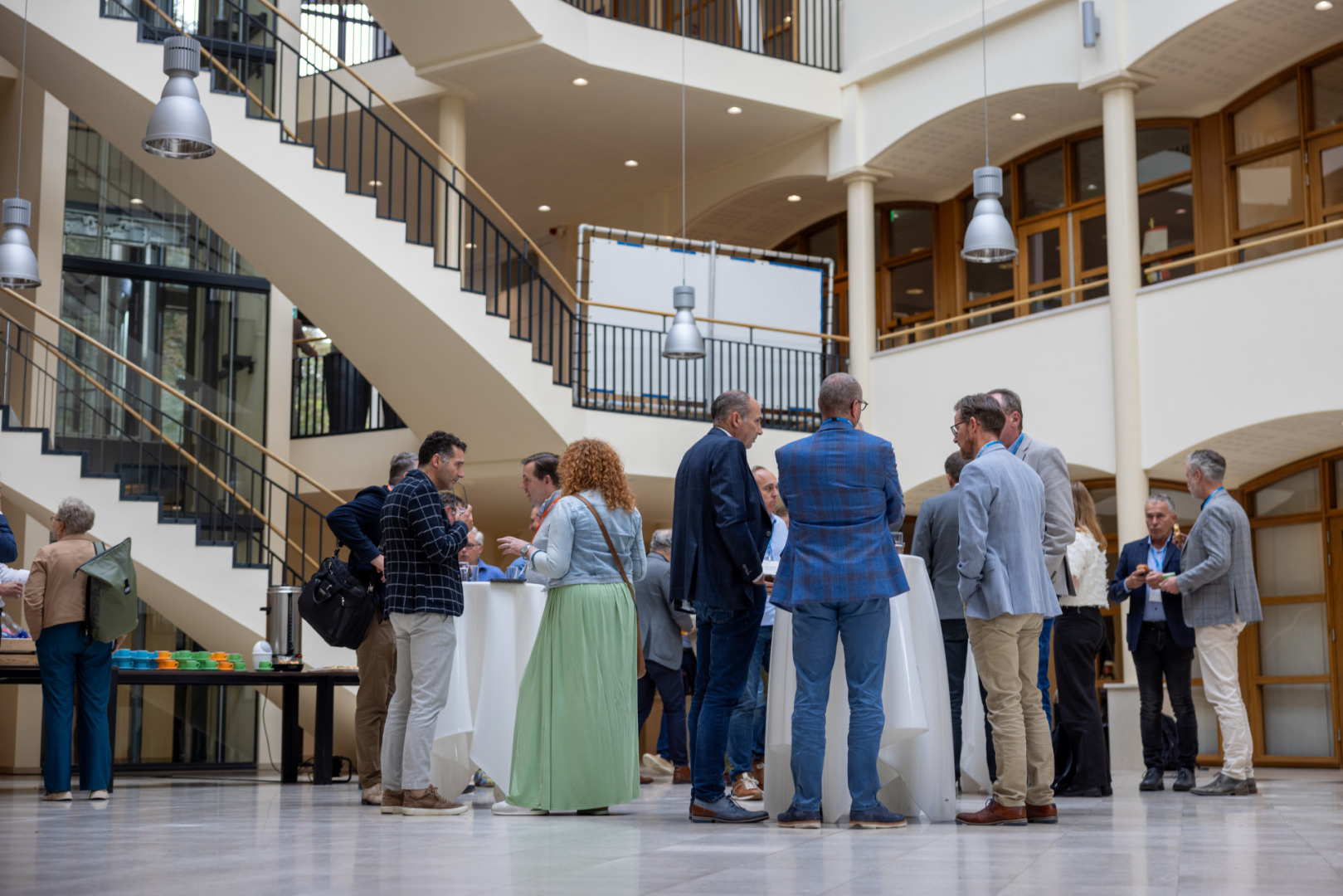
A large group of HR professionals gathered at FHI in Leusden on Thursday, November 5, 2026, for the HRM Current Affairs Seminar. The program included employment law, pensions, sustainable employability, learning and development, generational management, and AI. Diverse topics, but throughout the day, the same question kept recurring: how do you prepare an organization for changes that are already visible?
Employment law offered a concrete starting point for this. The specialists at FHI Advice Partner Vestius Advocaten discussed, among other things, poor performance, salary transparency, non-compete clauses, the position of self-employed professionals, and privacy in the use of AI. In a performance improvement plan following dismissal due to poor performance, building a solid file is crucial. For example, an employee must be informed in a timely manner of what is going wrong and be given a serious opportunity to improve their performance. Concrete goals, guidance, and regular evaluation are part of this.
New technology is also making a significant inroad into employment law. AI can select CVs or analyze data about employees, but available data is not automatically suitable for assessment and contains personal data, bringing the GDPR into play. An organization must determine in advance its purpose, the legal basis on which data is processed, and who ultimately verifies an automated outcome. The works council or employee representative body may also play a role in this.
Don't wait until it pinches
That forward-looking perspective was also reflected in sustainable employability. Jacoline de Braak from ArboNed turned the usual question on its head. It is not just about enabling employees to reach retirement age in good health. The question is what someone needs to stay. able, willing and contribute. Work capacity is related to physical and mental capacity, recovery, work environment, and motivation.
The retirement age also marked the transition to the new pension system. Misja van Breenen from Slap Pension showed where the Netherlands stands regarding the transition to the Pensions Future Act. He discussed the key changes, the progress of the pension transition, and differences between pension schemes. For employers, the transition means they must review their own scheme and the consequences for employees in a timely manner.
Employee development ties in directly with this. In the session of the FHI Academy The focus was not on training, but on the direction of the organization. Aging, a tight labor market, AI, the energy transition, and new laws and regulations are changing the nature of work. Those who only react to this when knowledge disappears or vacancies can no longer be filled are too late. Therefore, HRD connects the development of the organization with what employees will need to know and be able to do in the future.
Generation management also received a critical look. Sandra Engelbertink and Laura Smidt from Human Resources showed how easily we associate traits with Gen Z, millennials, or baby boomers. A generational profile can help to get a sense of who someone is, but it doesn't reveal who they are. Therefore, don't just ask about birth year or generation, but above all: what does someone need now, and what do they bring to the table?
AI: from trying to organizing
Felipe Wesbonk of KickAI This aligned with the AI development that had already been discussed frequently throughout the day from a different perspective. AI now affects virtually every HR department. The next step is not simply using more AI. It is about governance. AI is shifting from isolated prompts and analyses to recurring tasks, workflows, and specialized agents. In doing so, good sources, clear instructions, and human oversight remain necessary.
That is perhaps also the shortest summary of this edition of the HRM Current Affairs Seminar. HR is not getting less on its plate. Pensions are changing, legislation is evolving, employees are working longer, and AI is moving ever further into the organization. Waiting until a problem presents itself is therefore not a strategy. The key is to look ahead, have the conversation, and organize in a timely manner.
Benefit from the services of FHI and other supporting services designed to support your business.