You don't have to figure it out alone.
By: Hans Risseeuw
A good job, interesting projects, continuous personal development, and meanwhile still having enough time left for the rest of your life. There are many possibilities for young professionals. But the more possibilities there seem to be, the more complicated the question becomes: what actually suits me?
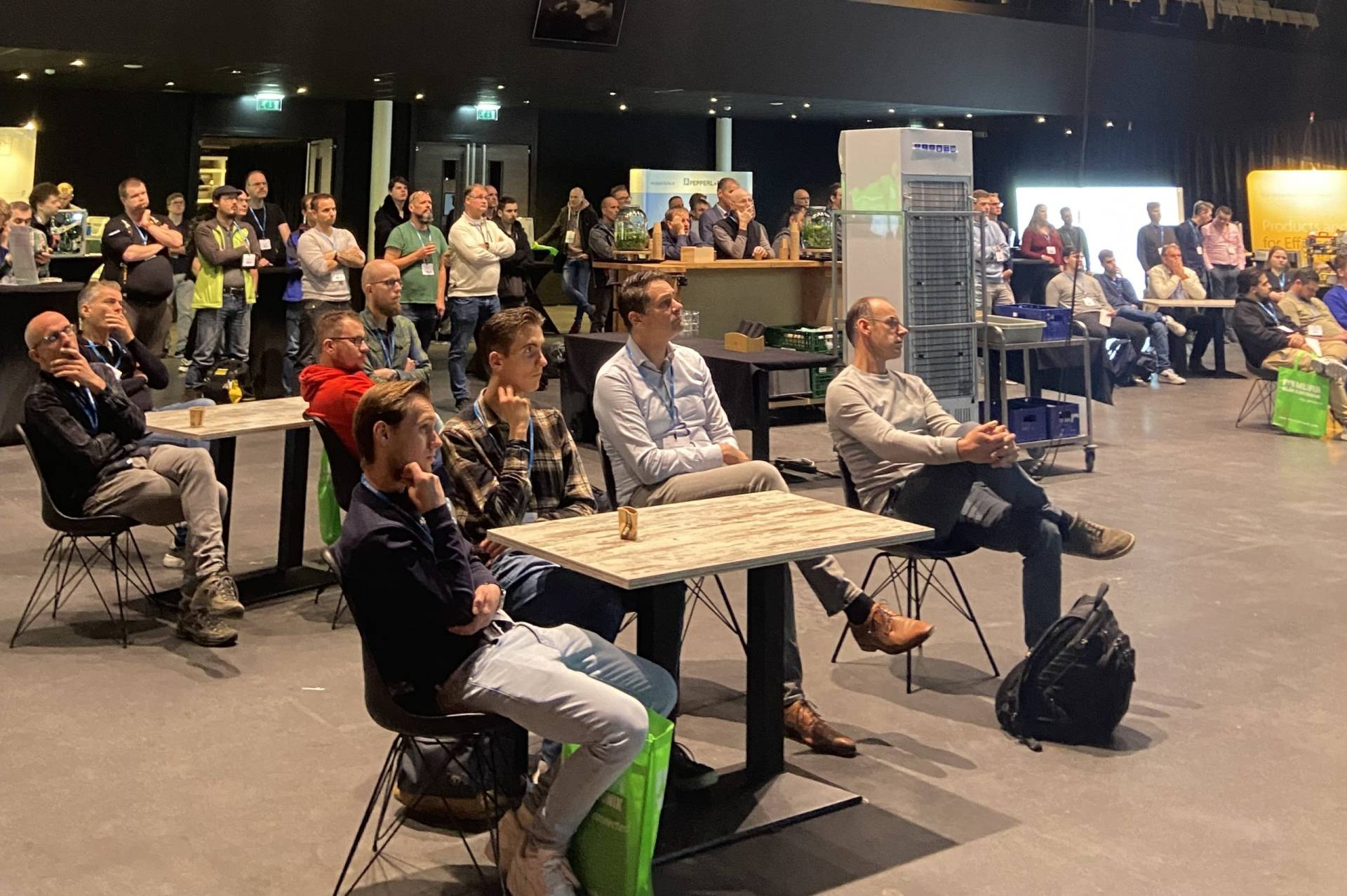
On November 5, young professionals from various FHI sectors come together during the Young Professionals Lunch & Connect in Amersfoort. Inspiration and networking take center stage, but FHI primarily wants to hear what is on the minds of young professionals. Which topics do they find important? What do they expect from a professional network? And what would encourage them to participate more often?
One of the speakers is Luuk Harmsen. As an applied psychologist, he focuses on motivation, job satisfaction, and personal development, among other things. His own career serves as an important source of inspiration in this regard. He went from stuttering and a fear of public speaking to regularly performing in front of an audience. Later, he temporarily chose to work as a garbage collector.[1]
If it is never enough
In his conversation with FHI, Luuk uses the term insecure overachiever: someone who tries to compensate for insecurity by working harder and harder, achieving more, and saying yes more often. The problem then does not necessarily lie in a lack of success. If the underlying thought remains that it is never enough, every subsequent achievement raises the bar again.
This can be particularly relatable at the beginning of a career. There are many choices, and social media constantly shows which choices others are making. That is why Luuk does not want to start with the question of how someone can become even more successful. He wants to first relieve the pressure and let participants explore what they themselves need.
His time as a garbage collector meant a break from his own pattern of performing and needing to be visible. Afterward, he chose to work differently, with less emphasis on constant marketing and more room for rest and relationships.
Which knob can you turn?
During his session, he uses Edward Deci and Richard Ryan's self-determination theory as a framework. Three basic psychological needs are central to this theory: autonomy, relatedness, and competence. Instead of treating job satisfaction as an abstract concept, this allows you to ask more concrete questions. Do I have enough room to make my own choices? Do I feel connected to the people around me? And do I get the opportunity to use and further develop my capabilities?
There is no ideal score for that. What one person needs might be less important to another. It is about discovering where the sticking point is and then looking at a step you can influence yourself.
That doesn't have to be a new job or a radical change of direction. During the meeting, Luuk specifically asks participants to formulate a small, achievable change for themselves.
From personal question to shared network
There, his story touches upon a broader development within FHI. With FHI Next-Gen The association brings together young professionals from member companies to explore sector themes and translate ideas into concrete activities. The group has focused, among other things, on the question of how the World of Industry, Technology & Science can become more relevant to young visitors. The next step is to develop activities for young professionals at FHI members.
This makes the meeting on November 5 more than just an afternoon about personal development. FHI also asks participants which themes are relevant to them and which activities they find interesting. In this way, young professionals can exert influence themselves on the development of the network of which they are a part.
A question about work that seems individual within a single organization can suddenly prove relatable when discussed with peers. It is precisely there that space for a network emerges: comparing experiences, learning from one another, and jointly determining which topics deserve attention.
Perhaps that is why job satisfaction does not begin with the question of how to get more out of yourself, but with the question of what you need to be able to work well. And you don't have to find the answer to that alone.
[1] Luuk Harmsen – Young Professional Speaker – De Jonge Sprekers
Featured: FHI NextGen