Systems, Data, and Decisions: What Motorsport Teaches Us About Reliability

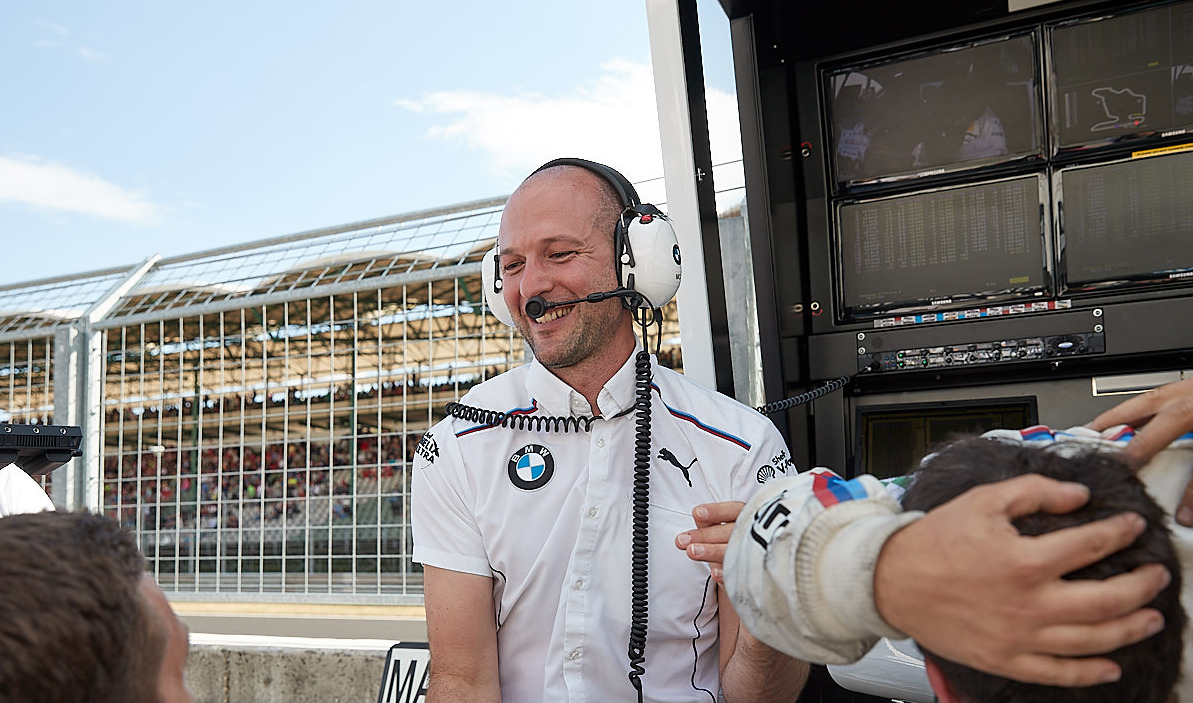
Three minutes before the finish of the 24 Hours of Le Mans in 2016, Toyota was on the verge of victory. Then, without warning, the leading car lost power and rolled to a halt. The cause was not a dramatic crash or a driver mistake, but a small technical component. For Marc Giannone, founder of Raceforce Global, it is a classic example of the importance of reliability in motorsport. “A system is only as strong as its weakest link.”
Register for PLOT Conference 2026
This idea forms the common thread throughout Giannone’s keynote presentation at the PLOT Conference 2026 at Circuit Zandvoort. An appropriate venue, as the engineer sees strong parallels between motorsport and environmental technology.
“Technology must operate reliably under a wide range of conditions. Whether that involves extreme vibrations and temperatures at Circuit Zandvoort or the controlled environment of an EMC test laboratory, the objective remains the same.”
The same principles that determine success on a race track also apply to the development and validation of systems for industrial and high-tech applications. An engineer ultimately has the same goal as a racing team: preventing a system from failing when it matters most.
Incorporate the Entire System
For Giannone, Toyota’s defeat at Le Mans is more than just an anecdote. It illustrates how even highly optimized systems remain vulnerable to seemingly minor failures. This is why modern reliability engineering increasingly focuses on the interaction between components rather than individual parts in isolation.
“Continuous monitoring and vulnerability testing can help prevent incidents. Technologies such as digital twins and AI are valuable tools in this process, helping organizations identify vulnerabilities and predict potential failures before systems are deployed in the field.”
When Technology Meets Human Behaviour
Weaknesses in electronics often become visible under challenging circumstances, such as during a F1 race. However, system robustness evolves throughout a product’s lifecycle. Early failures are often linked to technical design issues, while later incidents are increasingly connected to human decision-making.
“When new technologies are introduced, we see a spike in technically related fault reports shortly afterward. Once these teething problems have been resolved, failures are more likely to originate from processes, communication, or operational factors rather than fundamental technical defects.”
Major technical failures are rarely caused by a single mistake. They result from a chain of small decisions, assumptions, and communication issues within the team that reinforce one another.
Giannone illustrates this with an example from his own experience in motorsport.
“In a racing team, experts in aerodynamics, tires, braking systems, vehicle dynamics, and data analytics all work toward the same objective. Each discipline has its own priorities, and this can sometimes create tensions. An aerodynamicist, for example, wants maximum downforce, while a brake specialist prioritizes sufficient cooling. The tire engineer is focused on an entirely different set of parameters. Individually, they are all right. But in a top-level race car, it is the overall balance that matters.”
Data or Gut Feeling
It is often people’s egos that stand in the way of further improvement, according to Giannone.
The best solutions emerge when different disciplines work together and reinforce one another. However, this requires strong interpersonal skills and a genuine team spirit, where the shared objective comes first.
“Openness and transparency are essential for success in motorsport. People need to feel safe challenging assumptions, asking difficult questions, and discussing mistakes openly. Only then can organizations uncover the true root causes of incidents and prevent similar problems from occurring in the future.”
Too often, Giannone sees decisions being driven by emotions and gut feelings rather than data and facts.
“Every test and failure generate information and data. The challenge is to use that information consistently when making design and development decisions.”
He sees a clear parallel with what is known in elite sports as marginal gains: the accumulation of dozens of small improvements that together create a significant advantage.
“Reliability is the sum of hundreds of design choices, inspections, test cycles, and improvement actions. Every component, no matter how small, influences the quality of the final result.”
A Connected Ecosystem
The importance of reliable systems thinking will only increase in the coming years, the engineer predicts.
He paints an intriguing picture of the future, in which connected systems become part of a single integrated ecosystem.
“Think of autonomous vehicles, smart charging infrastructure, and cloud-based fleet management systems that continuously exchange information. These developments will place even higher demands on reliability and validation. The more systems are connected, the greater the impact a single failure can have on the whole. The question is no longer, ‘Does this component work?’ but rather, ‘How does the complete system behave under all circumstances?’”
The Most Important Lesson
On October 6, Giannone will take the audience in Zandvoort into a world of milliseconds, extreme performance, and engineering excellence.
Yet the most important lesson from motorsport is ultimately not about speed, but about people. About teams that use mistakes as opportunities to improve. About data that matters more than instinct. And about the realization that even the most advanced system is judged by its weakest link.
Register for PLOT Conference 2026