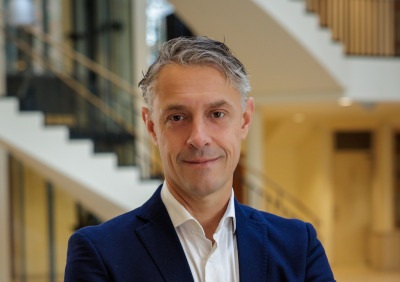
“If knowledge development lags behind, the capacity for innovation diminishes and mistakes are made more quickly. Then companies fall behind,” says Meijer. He is firm about what this means for the way companies view their personnel policy.
Finding new people is difficult, retraining takes time, so investing in the people who are already there is at least as important as recruiting. “That makes your company stronger, and it helps to retain people.” On the list of skills that are at risk of becoming scarce, he mentions technical craftsmanship, digital skills, cybersecurity, data analysis, and system integration, but also something less technical: good collaboration, leadership, and dealing with change.
The role of a federation
It comes as no surprise to Meijer that an individual company cannot solve these kinds of issues alone. That is precisely the reason an organization like FHI exists. “As an independent trade association, we can bring members, sectors, and professionals together. That way, not every company has to reinvent the wheel,” he says. He notes that smaller companies, in particular, often lack the time or personnel to properly organize training themselves. “They want a single location, suitable training, and as little hassle as possible.”
That offering was not entirely lacking, Meijer emphasizes. FHI was already organizing workshops and training courses, and within the sectors, learning pathways and collaborations with training providers existed. “So there was quite a lot on offer, but it didn't always fit together well.” What was missing was structure: a single place that brings existing learning pathways and training providers together, makes gaps visible, and ensures a clear structure.
From fragmented to bundled
That insight formed the starting point for what is now called the FHI Academy: a combination of federated offerings, generic and intended for all sectors together, and sector-specific offerings, tailored to each individual sector. The biggest challenge was the number of sectors FHI works with, each with its own questions and learning pathways. “The challenge was to create one clear structure from this, with room for what is needed per sector. So, together where possible, and per sector where necessary.” Central to this is the principle of “by and for the sector”: first listening to what companies and professionals need, then developing the offerings *together* with the sector. Vysta assists with development and implementation, but FHI and the sectors determine the direction and ensure that the offerings align with the members’ practices.
That distinction between federative and sector-specific offerings also has a practical side. Skills such as leadership and collaboration, for which many professionals are never trained but will one day encounter, are part of the federative offering. The substantive professional knowledge that varies by sector is developed specifically for that sector.
A glimpse into the future
According to Meijer, the foundation of the offering is taking increasingly clear shape: open enrollment, training within the company, customization, and dedicated contact persons who help companies move forward quickly. Where he envisions the Academy in two years, therefore, will be less about the offerings alone and more about their naturalness: that every affiliated company knows the FHI Academy and naturally turns to it as soon as there is a question regarding learning and development.
For Meijer, this growth takes place on multiple levels simultaneously: collectively, in the larger development challenges of the sector; company-specifically, in translating these challenges to a single company; and with the employees themselves, who must be able to continue developing throughout their entire careers. For him, these levels are interconnected: what is happening in the sector determines what companies need, and what companies and employees signal, in turn, feeds the Academy's agenda.
Meijer hopes that in five years, young talent will say that the sector offers plenty of opportunities and does work that really matters: “that you not only work with great technology there, but also get all the space to continue developing yourself.” Initiatives such as the World of Industry, Technology & Science (WoTS) trade fair are intended to demonstrate how broad and socially relevant technology is.
Doing nothing ultimately costs more.
Meijer understands entrepreneurs who say they have no time for development, but he also has a counter-argument. “Time is certainly limited in smaller companies. But doing nothing ultimately costs more.” The Academy exists precisely to lower that barrier: a single point of contact, no hassle with separate providers, and choosing only what you need. Moreover, members can easily and free of charge brainstorm about training and developing their employees, for example with Jasper Scherpenborg: advice tailored to their own company.
Finally, what Meijer wants to convey to companies is simple: participate, see what suits your business, and start small if necessary.
Want to know more about the FHI Academy or discuss learning and development? Email jasper.scherpenborg@fhi.nl or call the FHI Academy on 026 78 100 37.